VINTAGE / TRAINS / 1981
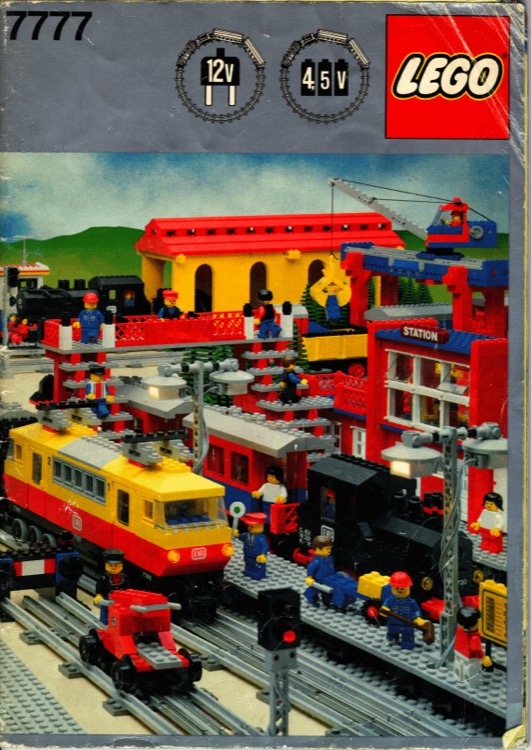
LEGO® Ideas Book 7777: When LEGO® Trains Were an Entire World
Not an instruction book, but a ticket into a railway with no boundaries
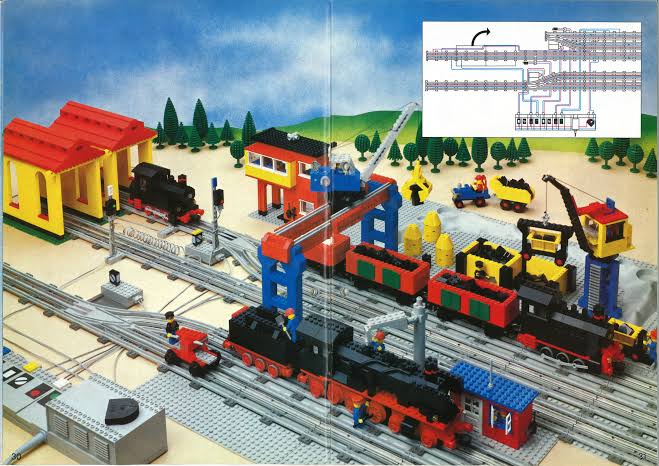
Some books are meant to be read, others consulted, and then there are books that, especially when you are a child, become entire worlds to disappear into. For me, the LEGO® Trains Ideas Book 7777, published in 1981, unquestionably belongs to that last category. It was entirely devoted to the LEGO® railway world: locomotives, wagons, freight yards, stations, bridges, signals, layouts and maintenance equipment. But simply describing it as a book of building ideas would miss the point, because its real value was showing how large the railway system in your hands could become.
That is perhaps what fascinates me most about it today: the train itself was never the only protagonist. There was an entire world around it. Tracks, points, signals, level crossings, engine sheds, cranes, bridges, stations and specialised rolling stock. The locomotive was simply one element of a much larger organism. Looking through 7777, you can clearly see a philosophy that I find much harder to identify in modern LEGO® railways: the railway itself was a system to build, extend and modify, rather than simply a collection of individual sets.
The book mixed large photographs of railway layouts with technical details, alternative models and actual building instructions. Official products appeared alongside modified and completely original locomotives, wagons and structures. LEGO® was effectively showing you its own sets and immediately afterwards saying: good, now forget the box for a moment and build something of your own.
Don’t have all the pieces? That was almost the point
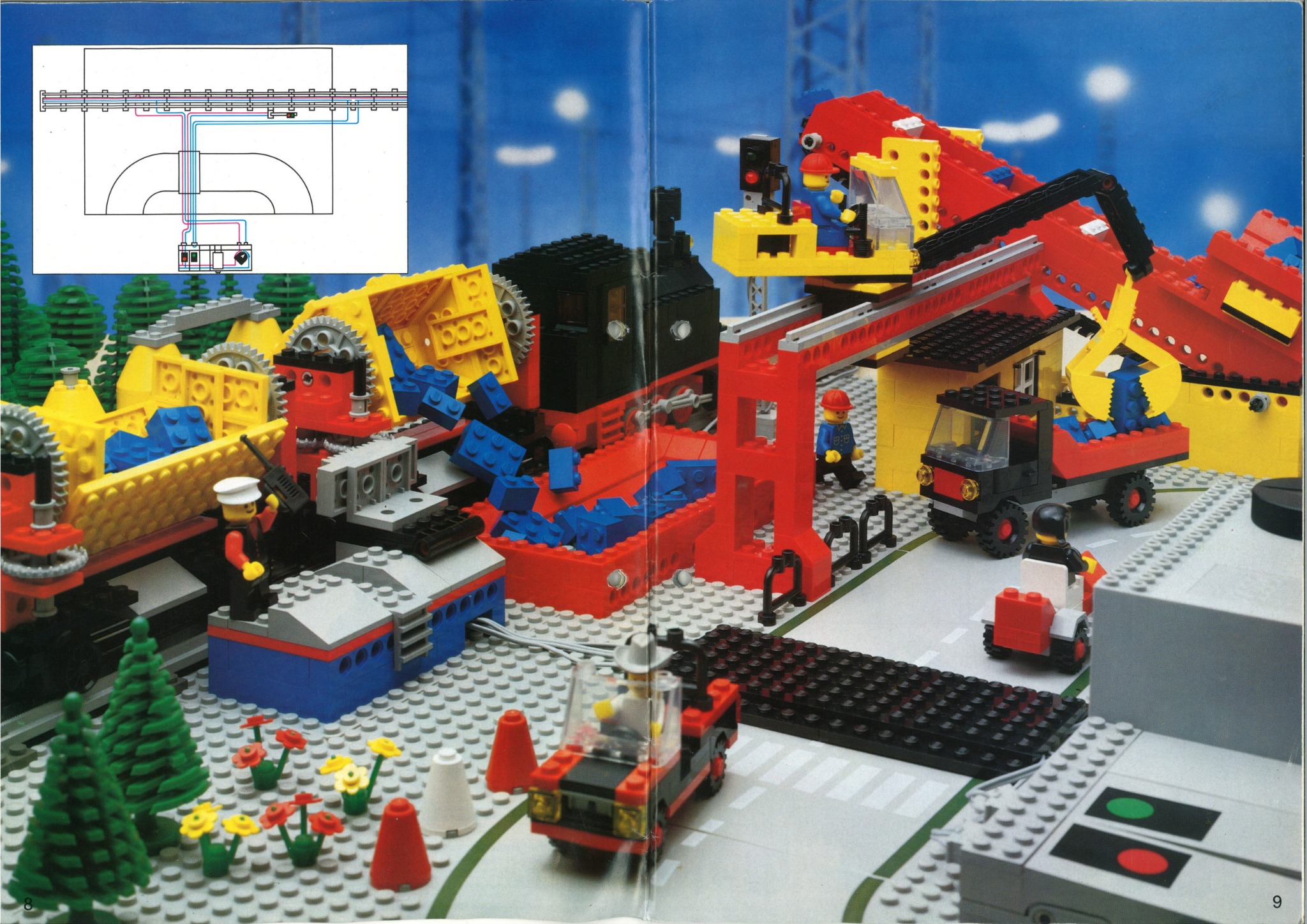
The opening message of the Ideas Book may be its most important feature. You probably did not own every element used in the models shown, but that should not stop you. Use what you have, change colours, modify solutions and invent something different. To me, that is the entire philosophy of the old Ideas Books. They were not disguised catalogues showing you dozens of additional products to buy; they made you want to return to your box of LEGO® and start building again.
You saw an incredible locomotive but did not have the correct wheels? Build another version. The bridge required beams you did not own? Find another solution. Not enough track to reproduce the photographed layout? Design a smaller one. Perfect reproduction was never the goal. Trying was.
Those limitations, frustrating as they could be for a child, probably became one of LEGO®’s most effective creativity boosters.
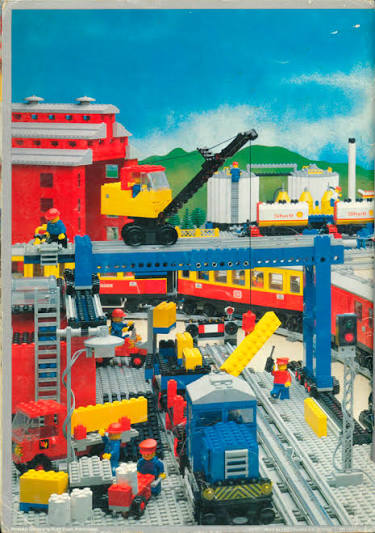
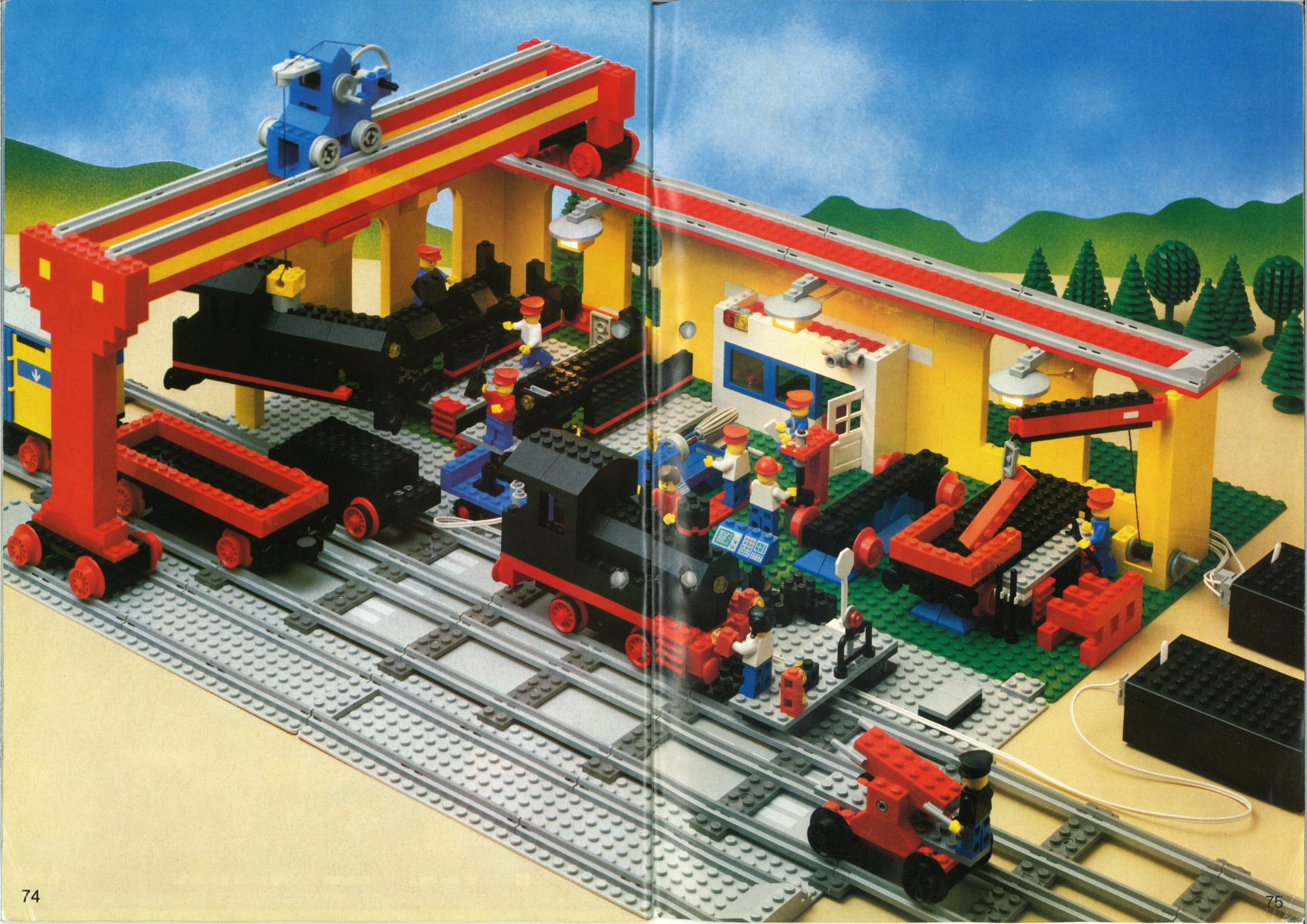
The large environments reinforced this perfectly. They were not sterile models photographed against white backgrounds, but complete worlds full of activity. You could spend ages examining a double-page spread, trying to understand where a track went, how a crane worked or what was hidden in the background. Every time you looked, you found another idea.
Impossible locomotives and a complete railway system
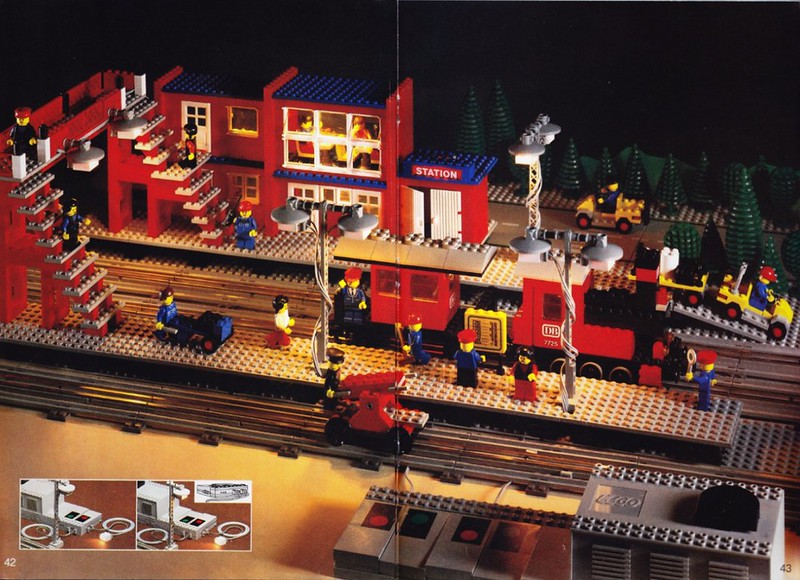
One of the most memorable models is the large black steam locomotive. It looked like something you desperately wanted to find in a shop, yet it was not an official set. Building it exactly required a fairly substantial selection of specialised railway parts, but the philosophy of the book remained unchanged: if you cannot build that locomotive exactly, take the idea, change it and make it yours.
Today we would call the result a MOC or a MOD. Back then, we were simply children taking apart one model because we had seen a photograph and wanted to discover whether we could create something similar ourselves.
The same applied throughout the book: alternative locomotives, bridges, signals, cranes, yards and maintenance vehicles. Pieces from other LEGO® themes could naturally become part of the railway. There were no rigid boundaries. A Space element could be repurposed on a railway vehicle, while a Technic component might become part of a bridge. The LEGO® System genuinely felt like a system.
The sections devoted to railway layouts are particularly nostalgic today. LEGO® was not merely selling a train; it was encouraging you to design an entire railway infrastructure. That, to me, perfectly explains why LEGO® trains felt different in that period. Modern models may be more detailed and realistic, but that sense of an open, expandable system has become much less visible.
7777 was not simply asking, “Do you want to build this train?”
It was asking: “What railway do you want to build?”
4.5V, 12V and a LEGO® that trusted the builder
The book included both the 4.5V battery-powered system and the more sophisticated 12V railway world. The latter remains particularly fascinating because of the infrastructure and operational possibilities it offered, but the basic principle applied to both: what you owned should never become a creative limitation.
The presentation of the models also reveals a different approach to building. 7777 expected you to observe, compare and understand. Not everything was explained through endless microscopic steps. Sometimes you simply had to study an image and work things out.
That does not mean children were somehow smarter in the past. But LEGO® certainly left more of the process to the builder, and that additional effort became part of the experience.
A small railway worker even appears repeatedly throughout the book, giving the pages a subtle narrative continuity. It turns the volume from a random collection of models into a journey through a complete railway world filled with machines, infrastructure and ideas.
7777 and the way I still think about LEGO® trains
Perhaps this is why, even today, I find it difficult to think about a LEGO® railway project as simply a train. I am interested in everything around it: the signal, the freight yard, the small building beside the track, the unusual wagon and the mechanical detail that may be almost unnecessary but somehow makes the entire scene believable.
An isolated train can be a beautiful model.
But once you start building a world around it, it becomes a railway.
7777 taught exactly that. And it did so without tutorials, YouTube, Stud.io or BrickLink. It had photographs, diagrams, some instructions and an extraordinary number of ideas. That was enough.
For this reason, I no longer see the book simply as a beautiful vintage LEGO® object. It represents a philosophy I still feel deeply connected to: the completed model was not the final destination, but the raw material for the next one. You built, observed, understood, dismantled and started again.
Maybe we need another 7777 today
Whenever I think about this book, one question inevitably comes to mind: what could a modern LEGO® Trains Ideas Book look like today? With Powered Up, LEDs, sensors, programming, digital design and the enormous selection of elements now available, we could create automated freight yards, signalling systems, turntables, realistic locomotive functions, bridges and industrial installations.
We could do extraordinary things.
And yet, in some respects, the official LEGO® railway world has become much smaller.
Perhaps that is precisely why a book published in 1981 can still feel so powerful. Not because we necessarily need to return to the past, but because it reminds us of something extremely simple: the set you have just finished building should not be the end of the game. It should be the beginning.
Open the box of spare parts. Take something apart. Look at that locomotive you cannot reproduce exactly.
And try anyway.
More than four decades later, I think the LEGO® Trains Ideas Book 7777 still has exactly that to teach us.
The LEGO® 7866 remote-controlled crossing is a concrete example of the railway philosophy explored in this book.