
VINTAGE / TECHNIC / 1980
LEGO® Technic Ideas Book 8888: When LEGO® Taught Us to Imagine
One book, a handful of pieces and endless possibilities
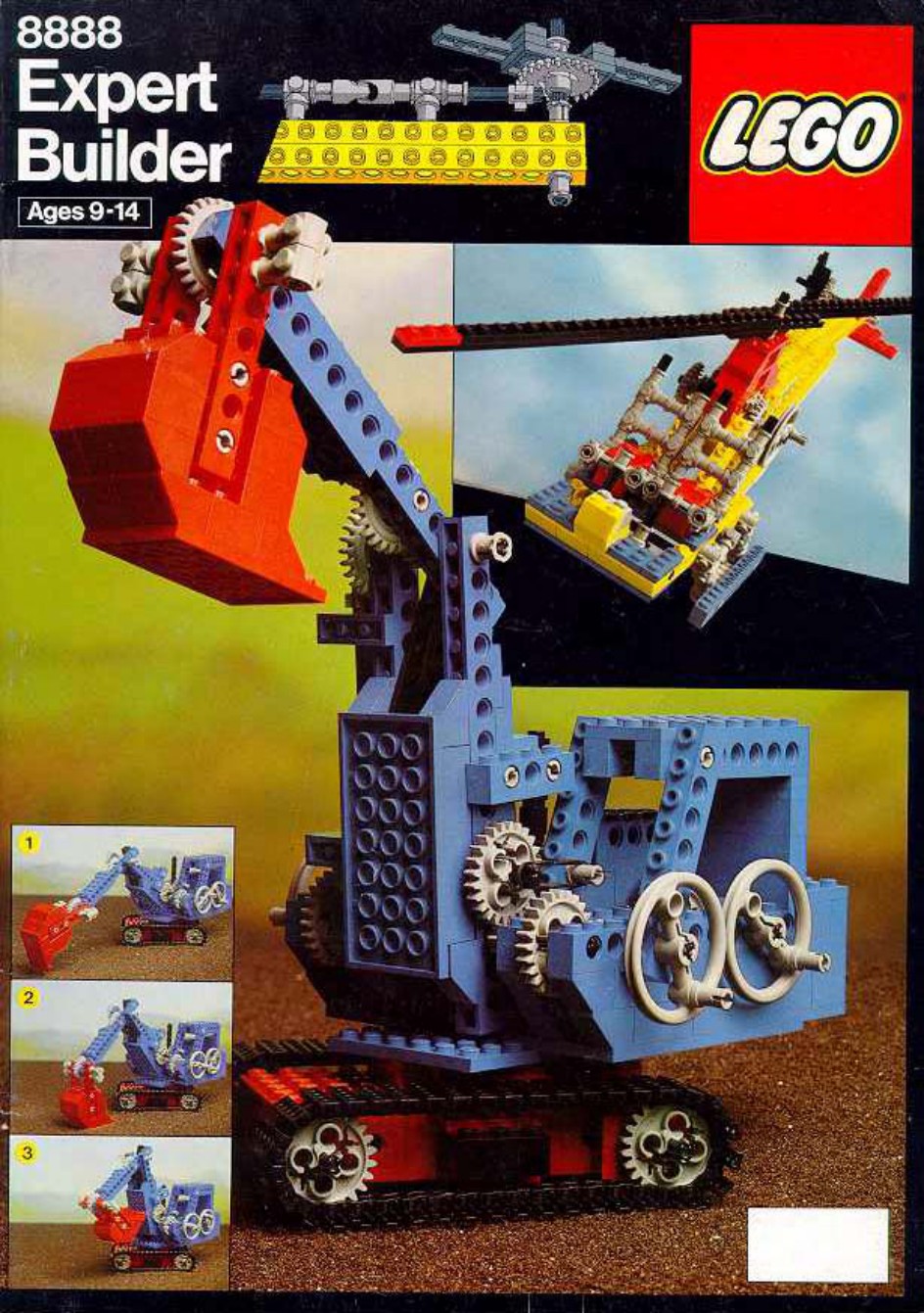
There are objects that, even more than forty years later, can instantly take you back to a very specific moment in your life. For me, one of them is the LEGO® Technic Ideas Book 8888. It wasn’t a set. It contained no bricks. There was no main model to build, photograph and place on a shelf. It was simply a book.
And yet, for anyone discovering LEGO® Technic during the 1980s, those pages could be worth almost as much as a box full of pieces. Perhaps even more. Published in 1980, the LEGO® Technic Ideas Book 8888 used its one hundred pages to show models, mechanisms, photographs and construction ideas created with the Technic elements available at the time. But describing it that way only tells half the story.
Because 8888 wasn’t simply teaching us what to build. More importantly, it was teaching us how to think with LEGO®.
LEGO® Technic in the 1980s: fewer elements, more imagination
To understand why a book like 8888 mattered so much, we need to go back to LEGO® Technic in those years. The system was much simpler than it is today. The number of available elements was dramatically smaller. Beams, axles, gears, pulleys, wheels, motors and a relatively limited collection of other components formed most of the builder’s toolbox. The enormous variety of specialised elements we have today simply did not exist.
And that meant you had to invent. A function rarely came from one perfect element designed specifically for that task. It came from combining the pieces you already had in an intelligent way. A wheel could become a pulley. An axle could become part of a transmission. A handful of gears could become a reduction gearbox, a differential, a lifting mechanism or part of some strange automated machine.
That was what fascinated me most about Technic. Building meant understanding. Understanding inevitably made you want to modify things. And modifying things eventually meant taking everything apart and starting again.
The most important message in 8888
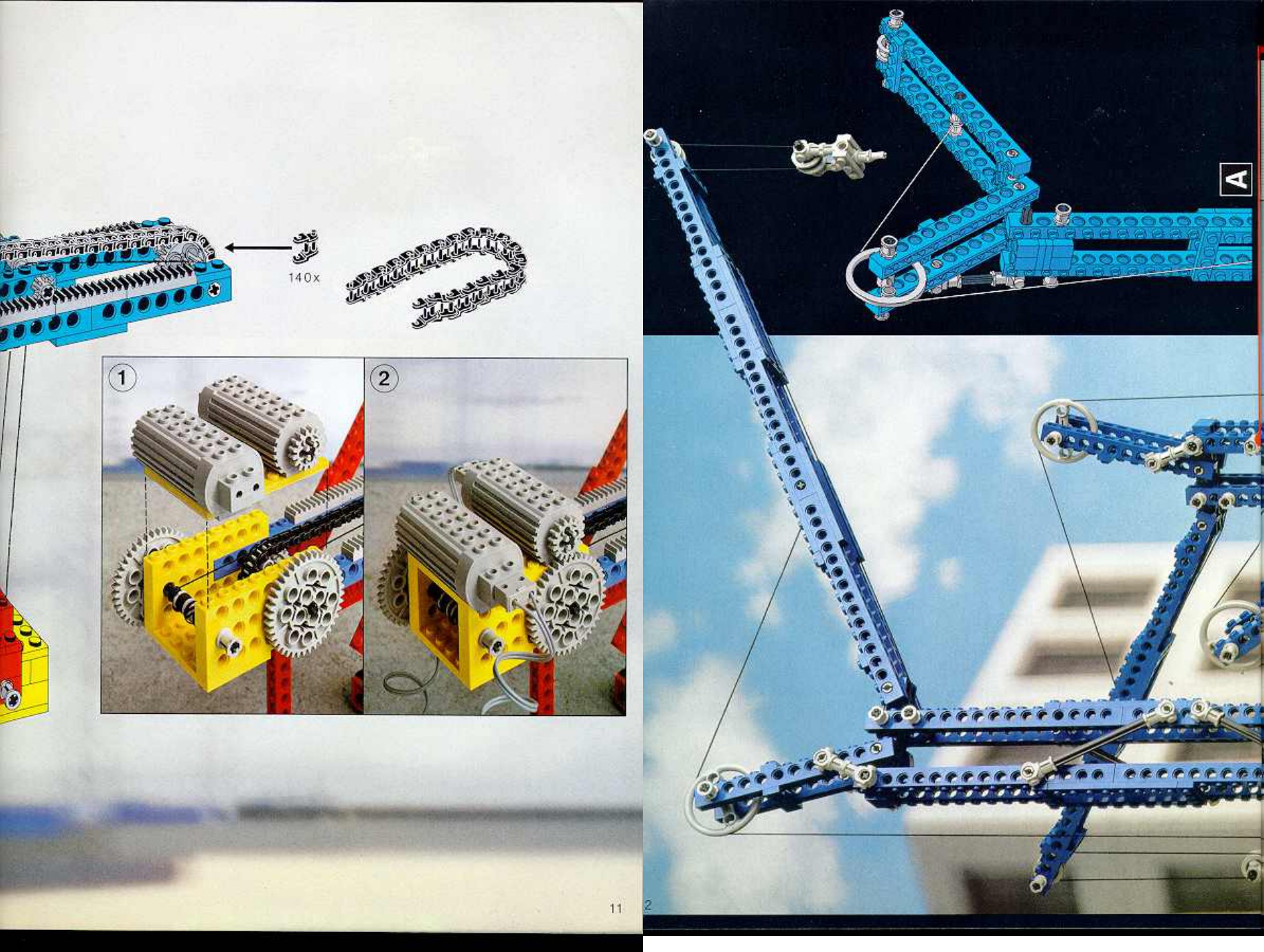
The opening pages of the Ideas Books contained a concept that, to me, perfectly represents the LEGO® philosophy of that period. The message, presented in several languages, was essentially very simple: don’t worry if you don’t own exactly the same pieces used in the models shown in the book. Try anyway. Use what you have. Change the colours, modify the construction and invent a different solution.
It is difficult to overstate how important that simple idea was. Because what LEGO® was effectively telling a child was: what you are looking at is not something you simply have to copy. It is a starting point. If the book showed a piece you didn’t own, that didn’t mean the model was impossible to build. It meant you had to find another solution.
Perhaps your excavator would be smaller. Perhaps it would use different wheels. Perhaps one of its functions would work in a completely different way. It didn’t matter. The important thing was to try. And that is exactly where creativity began.
They weren’t just instructions. They were provocations.
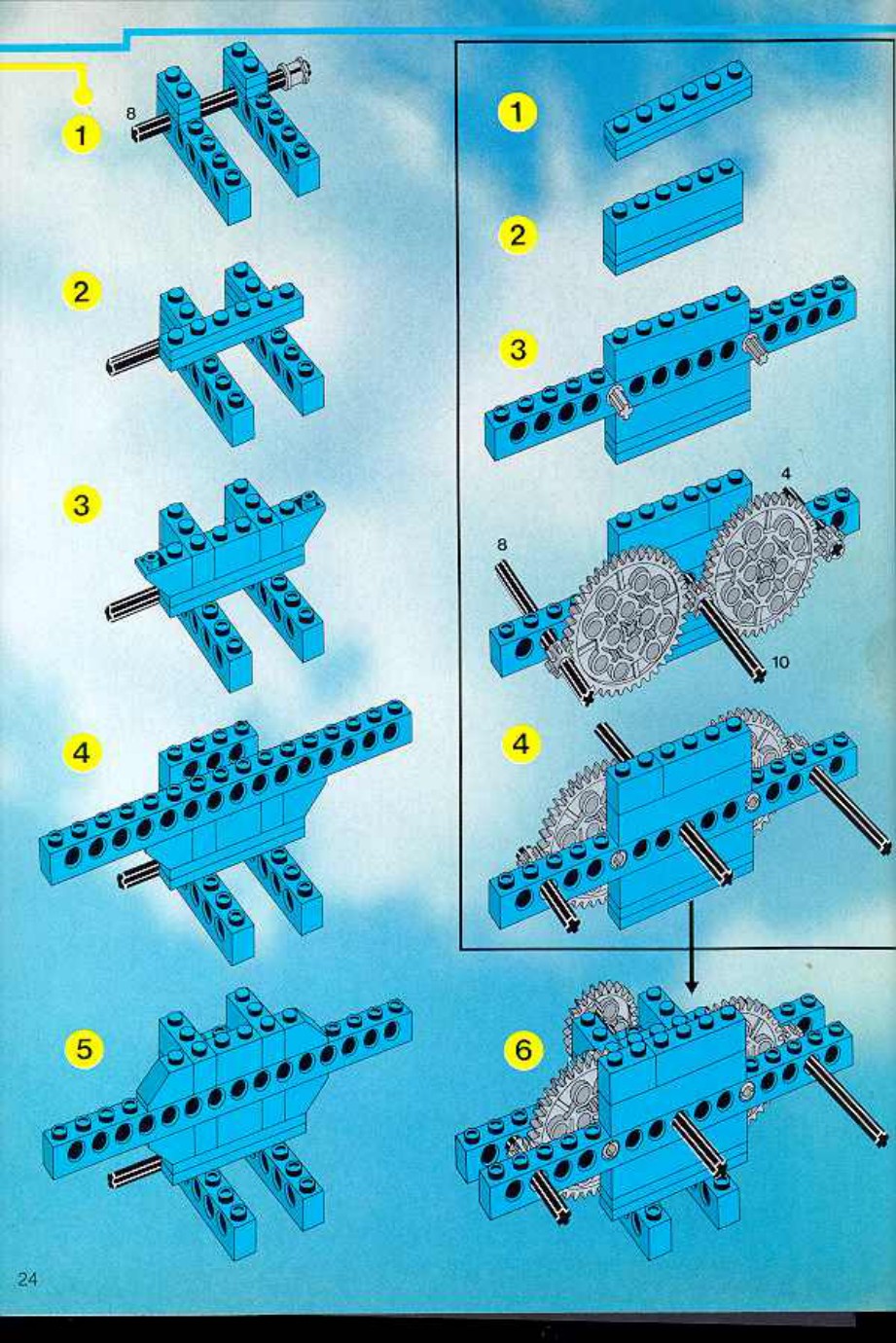
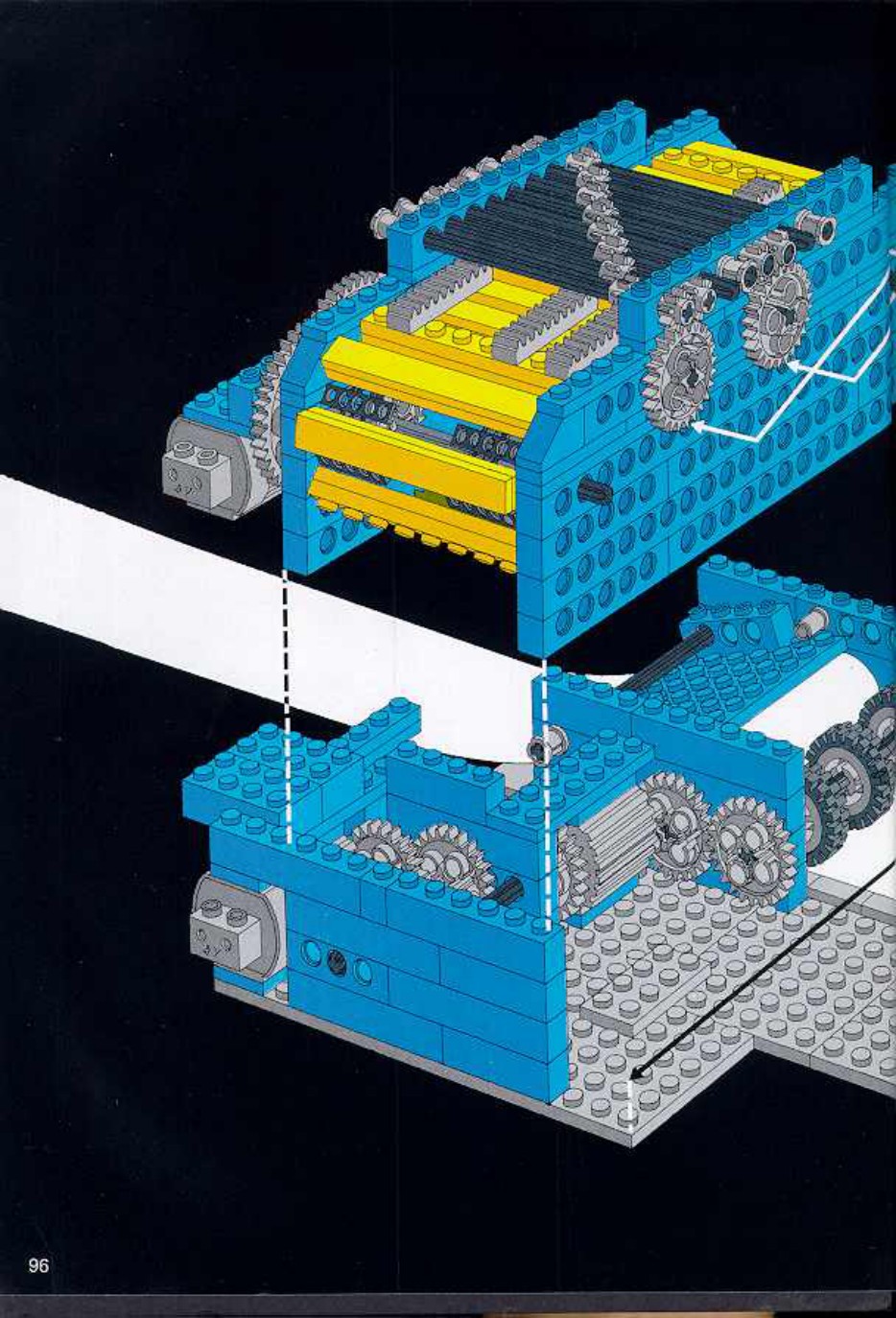
Today we are accustomed to incredibly detailed LEGO® instructions. One piece at a time. One step at a time. One numbered bag at a time. It is almost impossible to go wrong. The 8888 Ideas Book belonged to a very different philosophy. Some models were explained in detail, while others were simply shown through photographs or partial construction ideas. The book moved from relatively accessible builds to machines that, through the eyes of a child, seemed to belong in an engineering laboratory.
Cranes. Mechanisms. Agricultural machinery. Tracked vehicles. Motorised systems. Gear experiments. Automated mechanisms. Machines capable of surprisingly complex mechanical sequences. You looked at those photographs and thought: “Can you really do that with LEGO®?” And almost immediately came the second question: “Could I build it too?” That was the real game.
When having fewer pieces was almost an advantage
It sounds strange today. We have BrickLink. We have Stud.io. We have thousands of different elements. We can design a model virtually using thousands of parts and then order exactly what we are missing. In the 1980s things worked differently. Your collection was whatever happened to be in your box. That was it. If a model needed four large wheels and you only had two, you changed the design.
If the book used ten gears and you owned six, you found another ratio. If you didn’t have a beam of the correct length, you combined two shorter ones. And it is fascinating to think that this scarcity could actually become a powerful accelerator for creativity. Every limitation created a question. And every question led to an experiment.
Build. Take apart. Rebuild.
This is perhaps the part I miss the most today. A LEGO® set was not necessarily supposed to remain assembled forever. Quite the opposite. You built the main model. You played with it. You studied it. You understood how it worked. Then, sooner or later, the moment arrived. You took it apart. And its pieces became simply pieces again. No longer a tractor.
No longer a crane. No longer a car. Possibilities. An Ideas Book like 8888 existed precisely to restart that cycle. You opened it, saw something interesting and started searching through your own collection. You didn’t own everything you needed? Never mind. That was almost the whole point.
8888 and the LEGO® that no longer exists in quite the same way
I don’t want this to become one of those nostalgic articles where everything from the past is automatically considered better. LEGO® produces extraordinary products today, with a level of design sophistication and a variety of elements that would have seemed like science fiction in the 1980s. But I do believe something has changed. Back then, LEGO® seemed constantly to remind you that the completed set was not the destination.
It was a toolbox. The model pictured on the box was only one possibility. Ideas Books were perhaps the purest expression of that philosophy. They didn’t sell you more pieces. They taught you to look differently at the pieces you already owned. And that is a huge difference.
Technic before it became “Garage”
Anyone who follows ALEGO73 already knows my relationship with LEGO® Technic. It is probably the theme that shaped my LEGO® experience more than any other during the 1980s. And that is why looking at 8888 today gives me mixed feelings. On one side there is an enormous amount of nostalgia. On the other there is an unavoidable question. With all the technology and all the elements available today, what could a modern Technic Ideas Book become?
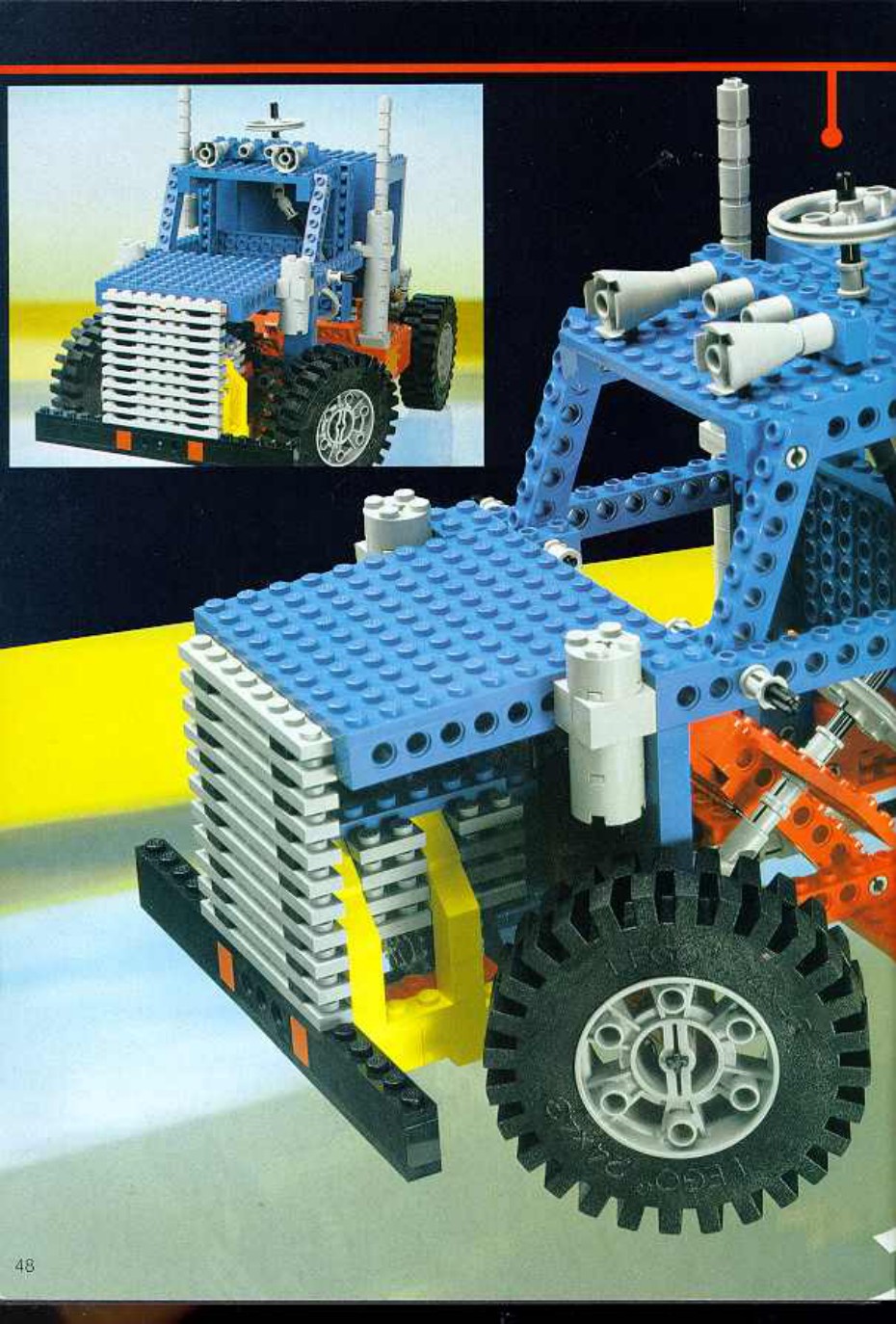
Imagine a book — or any modern equivalent — dedicated not simply to cars, but to mechanics. Gear reductions. Transmissions. Robots. Automation. Industrial machinery. Programmable systems. Experimental vehicles. Completely unnecessary but wonderfully complicated mechanisms. Today we have incredible tools with which to explore all of this. And yet LEGO® Technic has, at least partially, become what I increasingly joke about calling the LEGO® GARAGE theme.
Cars. Supercars. Hypercars. Race cars. More cars. Some of them are beautiful, of course. But every time I mentally reopen the pages of 8888, I remember that Technic once represented something much broader: discovering how things work.
The Ideas Book as a creativity booster
Today we constantly use the term MOC. Back in the 1980s, many of us had probably never even heard that acronym. But that was exactly what we were building. Our own creations. Without tutorials. Without YouTube. Without downloadable instructions. Without online marketplaces where we could immediately order the missing element. We had a box full of LEGO® pieces, a few catalogues and, if we were lucky, an Ideas Book.
And that was enough. 8888 showed you what other people had managed to create with those same basic elements, and suddenly your own collection seemed bigger. The pieces had not changed. Only the way you looked at them had changed. To me, that may be the best possible definition of inspiration.
A book that still has something to teach us
Today, the LEGO® Technic Ideas Book 8888 is a vintage object. A small piece of LEGO® history. It was the first in a short series of Technic Ideas Books that continued with other volumes over the following years. But it would be a mistake to see it only as a collector’s item. Looking through it today, the most interesting thing is not necessarily the models themselves.
It is the philosophy behind them. Don’t have the right piece? Use what you have. Can’t build it exactly the same way? Build it differently. Don’t know whether it will work? Try. In three words: take it apart and start again. That may be one of the most authentically LEGO® messages ever printed on a page.
Maybe we should all become a little more like 8888 again
Sometimes I think about how many LEGO® pieces we have today. Boxes. Drawers. Spare parts. BrickLink. Elements carefully sorted by colour, shape and function. And then I think about when we had far less. Paradoxically, perhaps we built more. Because an Ideas Book like 8888 wasn’t asking you to buy the model on the next page. It was asking you to open your own box.
Search through it. Find something. And start building. Perhaps that version of LEGO® no longer exists in exactly the same way. But the pieces are still here. And perhaps all we need to do is remember what a book published in 1980 was trying to teach us: it doesn’t matter if you cannot build exactly what you see. Try to build what you can. Imagination will take care of the rest.
The same approach to visible mechanics runs through my review of the LEGO® Technic 8859 Tractor.