
VINTAGE / TECHNIC / 8859 · 1981
LEGO® Technic 8859 Tractor: When Technic Really Meant Engineering
A tractor, a handful of mechanisms and a building philosophy I miss terribly today
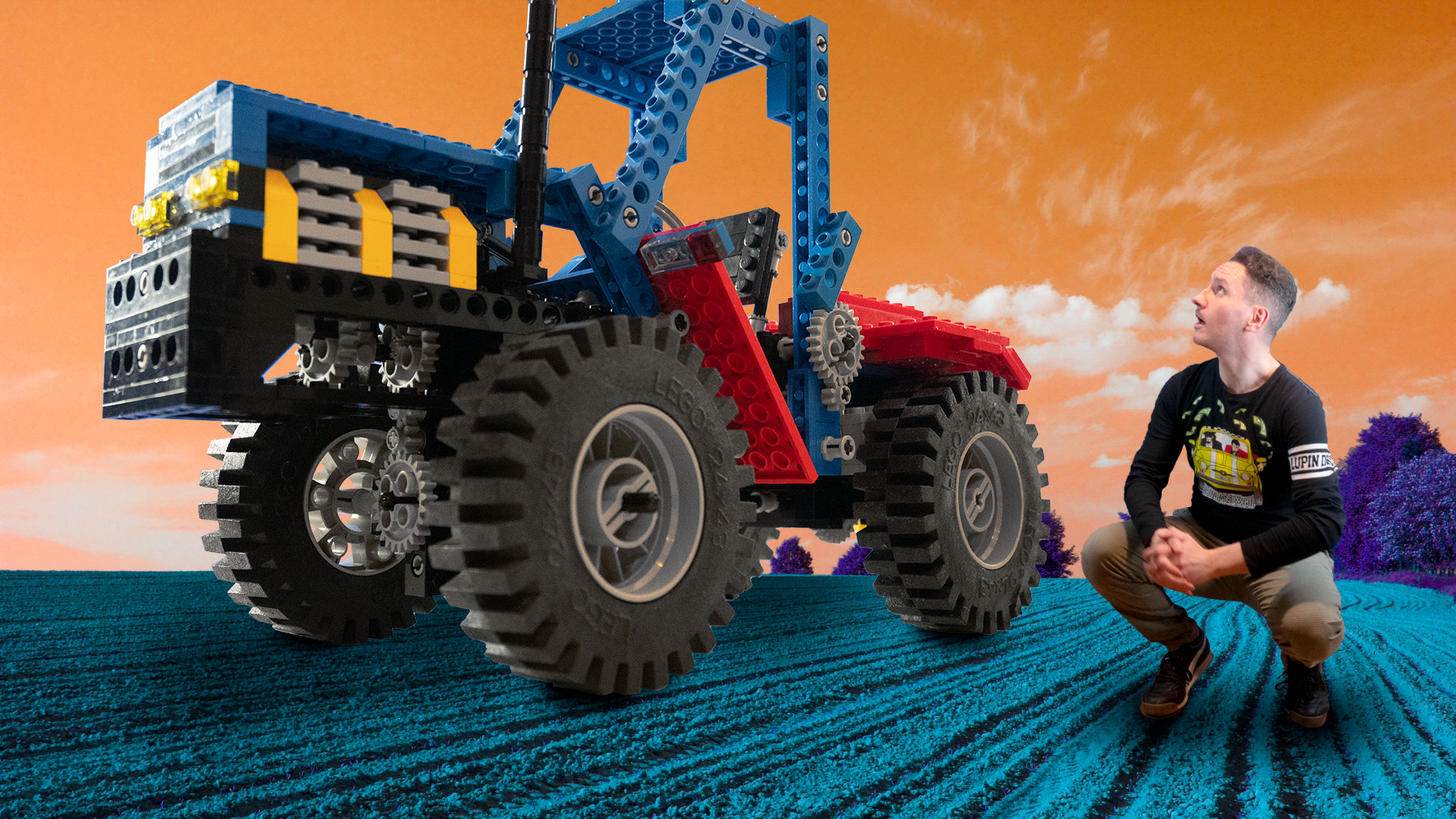
As I continue my journey through LEGO® Technic of the 1980s, sooner or later I had to reach the 8859 Tractor. It is an important model not just because of its size – still far from insignificant today – but above all because it perfectly represents what I continue to love about Technic from that period: a handful of functions, all understandable, all visible and, most importantly, all genuinely connected to the way the machine works.
Visually, of course, you have to look at it through the eyes of its time. The available parts offered only so many possibilities, and the result is inevitably much more basic than a modern Technic model. Yet once built, the 8859 has real presence. It is large and substantial, with enormous rear wheels that immediately give it the look of a proper agricultural machine. But the interesting part, at least for me, begins when we stop looking at it and start understanding what happens when we make it move.
A Few Functions, but the Right Ones
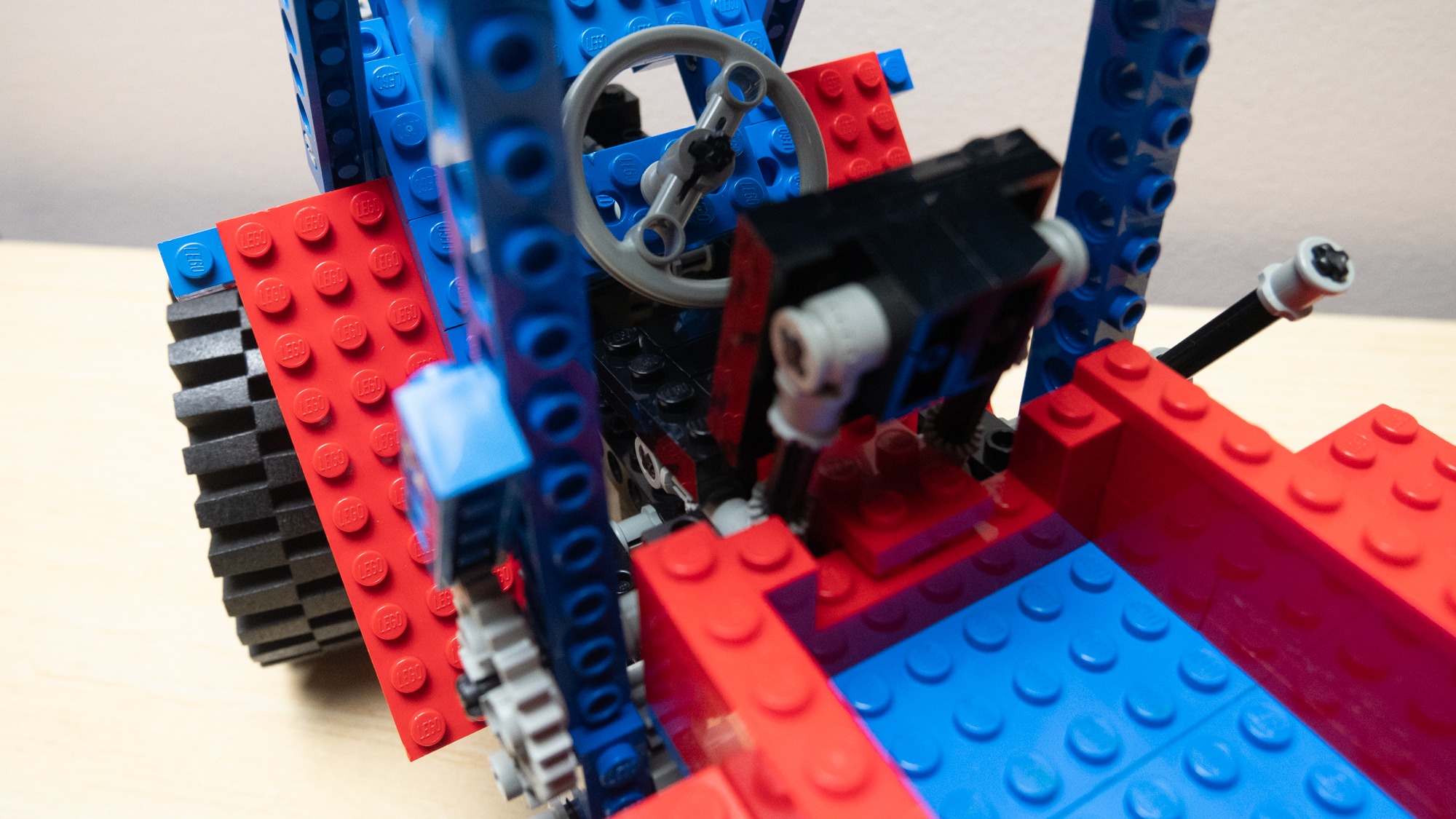
The steering is operated directly from the steering wheel using a classic rack-and-pinion arrangement. No Hand of God control hidden on the roof or compromises to make it easier to use: turn the steering wheel and the front wheels turn. It is a simple function, but entirely consistent with the original Technic philosophy, where a model was meant to show you how movement was produced.
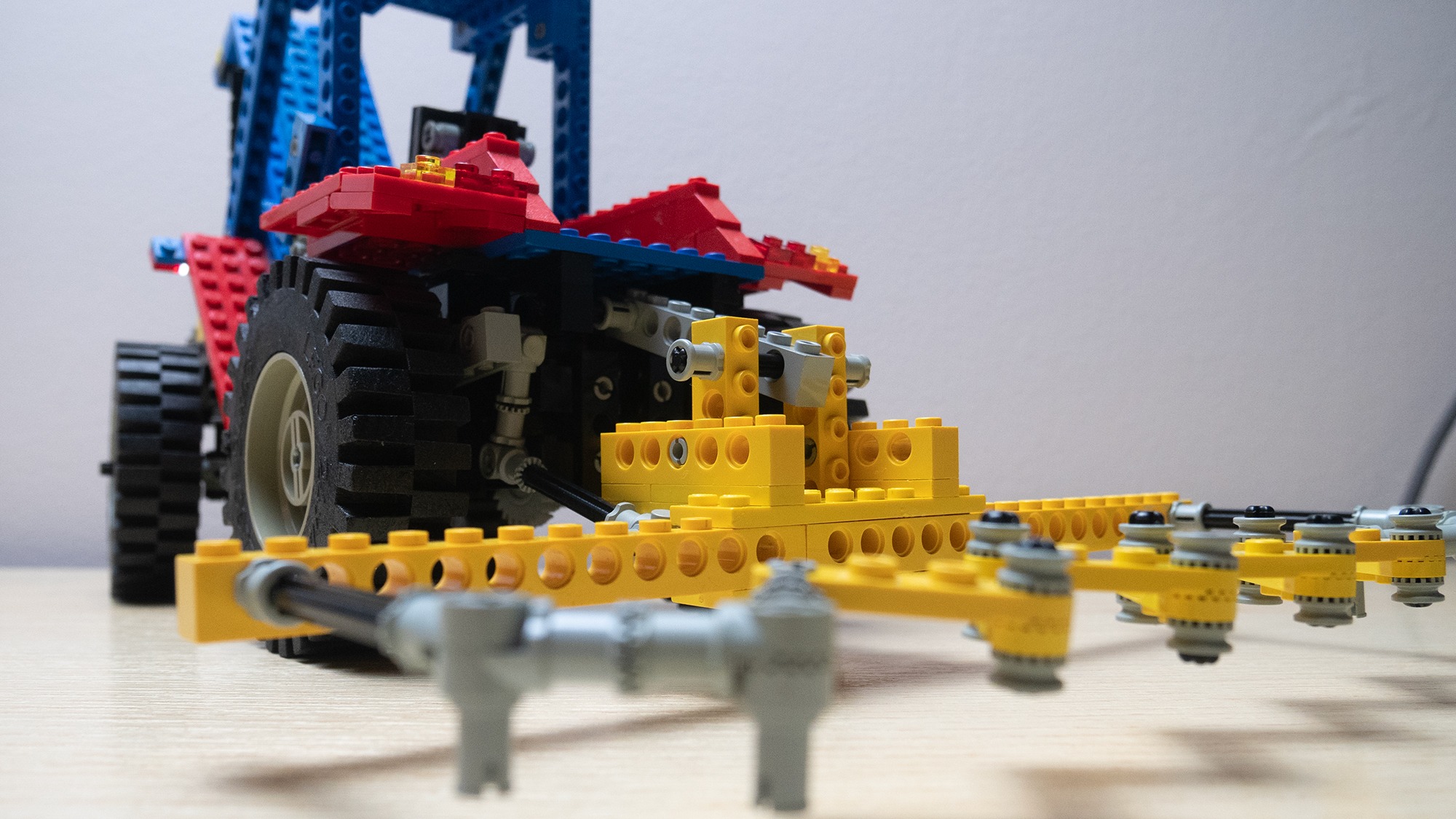
At the back, there is a lifting system for the agricultural implement. A lever raises and lowers it, while a locking mechanism stops it from dropping under its own weight. Again, nothing incredibly sophisticated, but watching solutions like these reminds me why Technic fascinated me so much as a child: it did not hide the mechanics; it put them right in front of you.
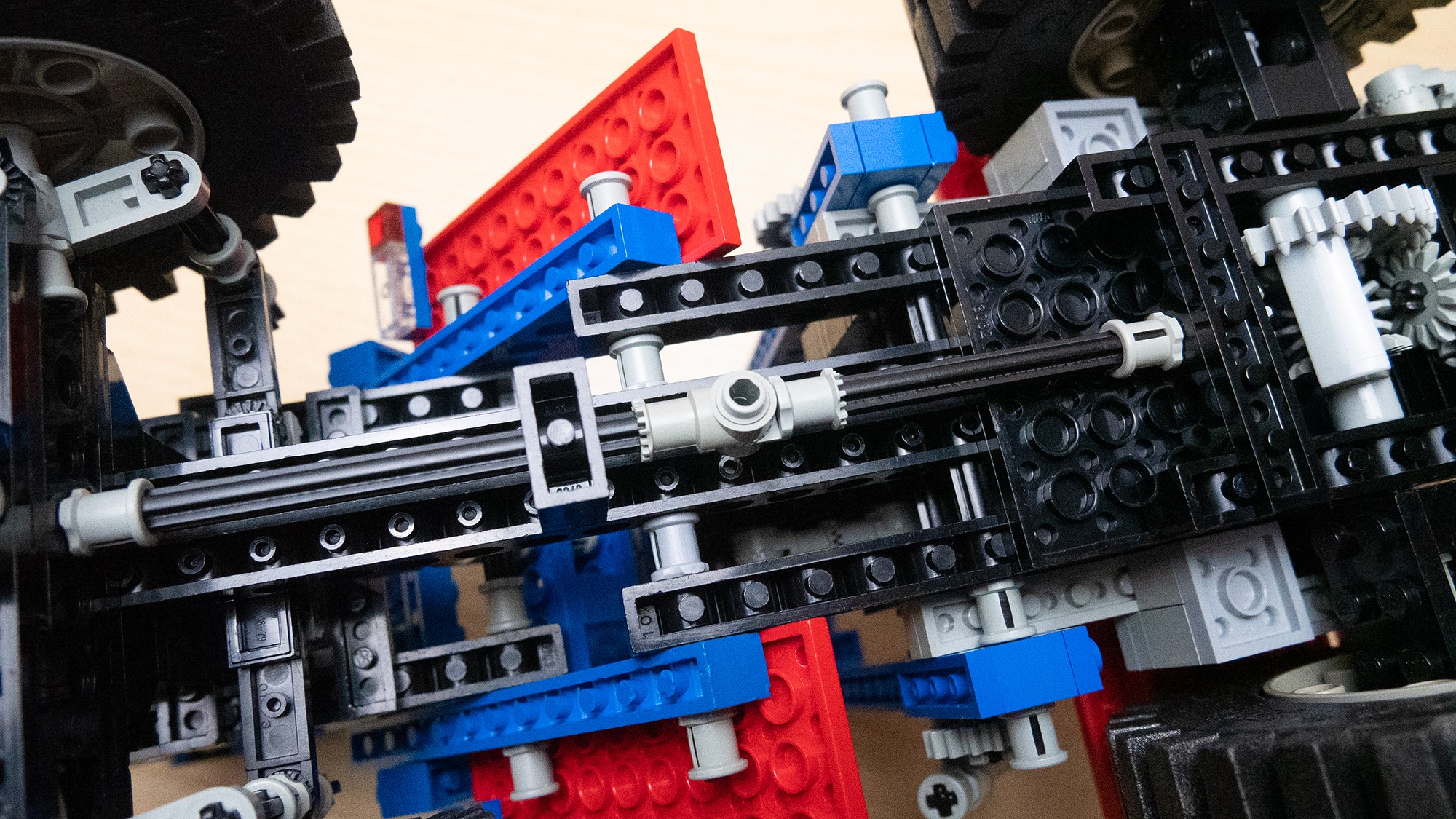
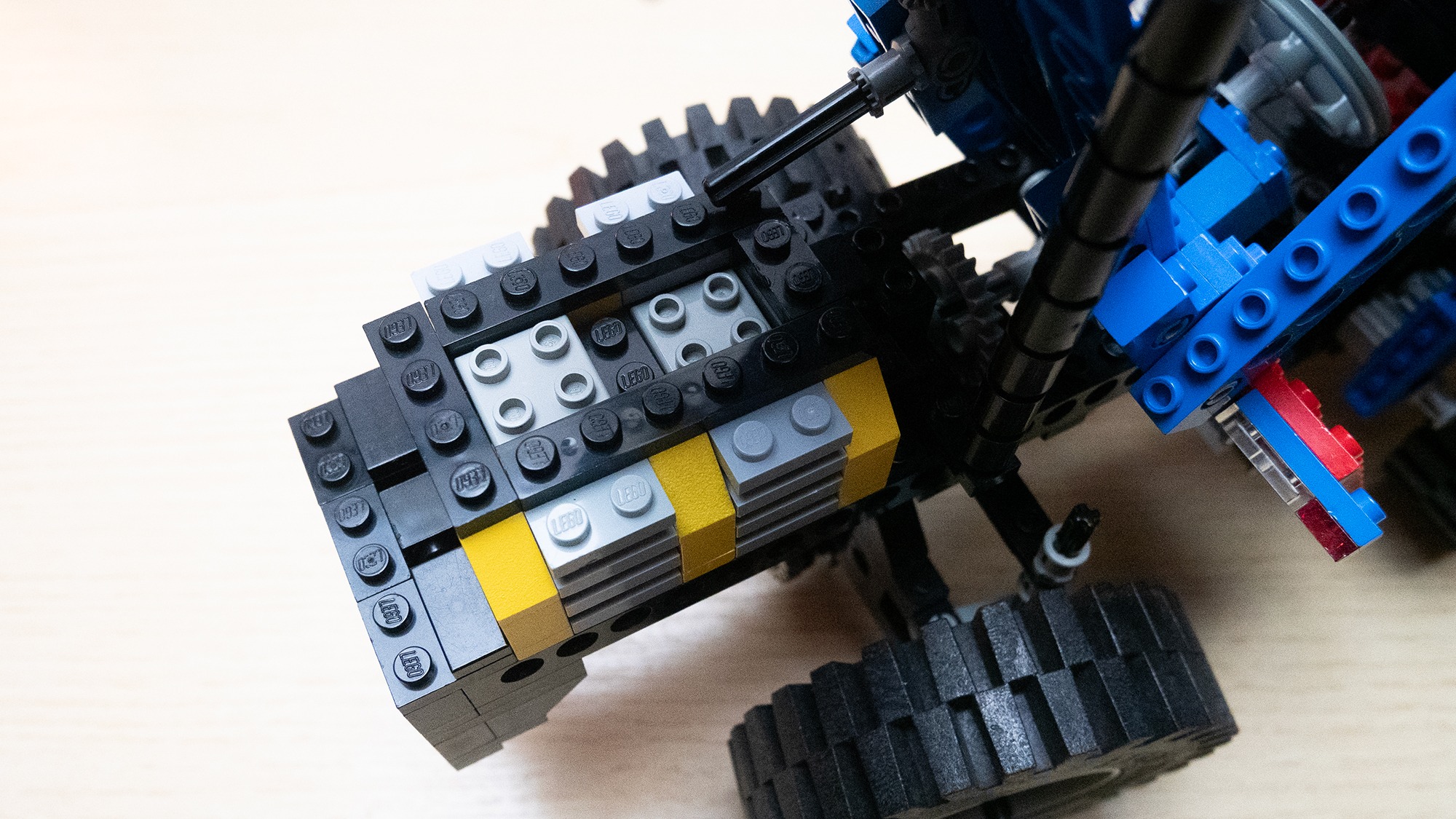
And then, of course, there is the engine. Under the bonnet are the famous square pistons of the era: just two cylinders, driven through the transmission connected to the rear wheels. Today it may seem almost elementary, but seeing those pistons move as you pushed the tractor forward was exactly the kind of mechanical magic that helped a child understand that a wheel, an axle, a gear and a piston were not simply separate pieces: they belonged to the same system.
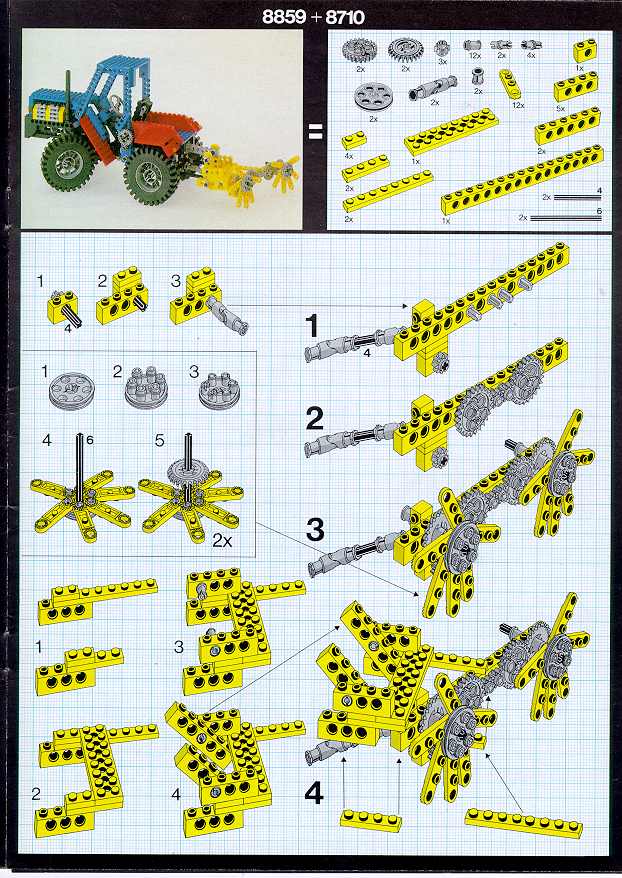
The 8859 also includes a rear differential and a power take-off, the familiar PTO, opening up possibilities for different implements. This is where the model becomes much more interesting than a simple “tractor with a plough”. The documentation of the time suggested several agricultural attachments, and even the plough itself could be reconfigured. Once again, LEGO® was not simply handing you a finished model: it was trying to show you that this construction could be the starting point for something else.
The Real Star? The Instruction Booklet
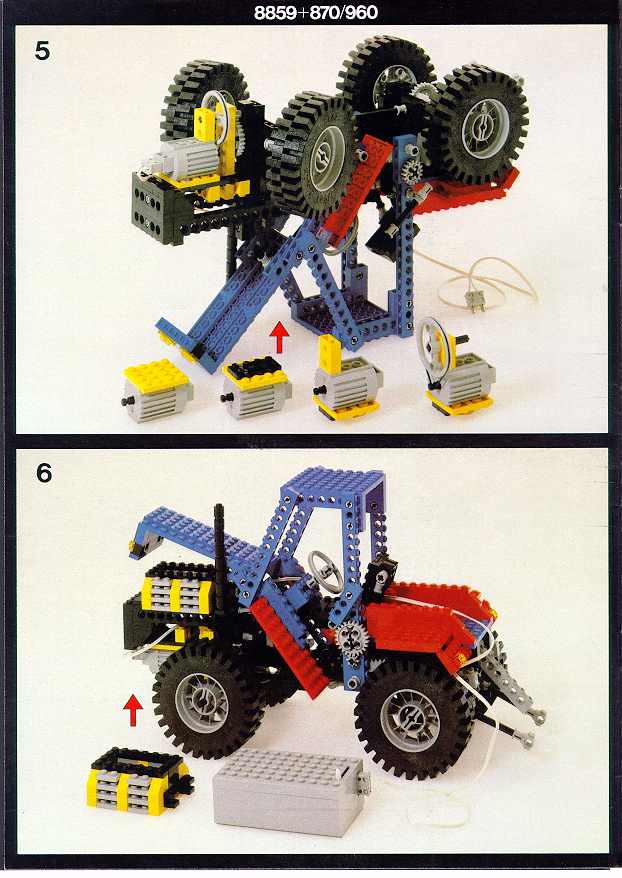
Perhaps this is precisely where, once again, I end up becoming more passionate about the philosophy than the set itself. The manual was not simply there to take you from opening the box to completing the A-model. Inside were alternative models, other implements and further ideas to build on. In the video, I had already built the unusual alternative model too: a rather futuristic-looking vehicle, not particularly complex but still capable of transforming the same pieces into something completely different.
It is an idea that keeps coming back whenever I talk about Technic of that period and the Ideas Books: the main model was not the end of the play experience. You built it, learned how it worked and then, at least in principle, took it apart. With the same pieces, you could make something else, or take one of the suggested ideas and modify it until it became your own.
Today we can have enormous Technic sets, with thousands of elements, prestigious licences and exceptionally detailed bodywork, yet often we do not even get a proper B-model. It is a paradox I still find difficult to ignore. We have far more pieces, vastly greater design possibilities and digital tools that would have seemed like science fiction back then, but in some cases we have lost that very encouragement to take things apart and rebuild them that was a fundamental part of Technic’s DNA.
This is not nostalgia for its own sake. I am not saying that a tractor from 1981 is technically superior to today’s best models: that would be absurd. I am saying that it explained engineering differently. Its purpose was not just to reproduce a machine, but to let you see steering, transmission, pistons, lifting mechanisms and gears working together.
And that difference matters a great deal to me.
What Stays with Me About the 8859
The LEGO® Technic 8859 is certainly not one of the most complex models I have built. Its functions are relatively few, and some solutions may seem almost naive through today’s eyes. But it is also one of those models in which every mechanism has a clear, understandable purpose.
Turn the steering wheel and you understand how the steering works. Move the tractor and you see the engine working. Operate a lever and you discover how the rear implement is lifted. Take everything apart and the manual invites you to build something else.
That was Technic.
Perhaps with fewer panels, less perfect bodywork and definitely fewer supercars. But with an enormous amount of mechanics deliberately left in plain sight.
That is exactly why, the more I return to building these old models, the more convinced I become of one thing: I do not find them fascinating simply because they belong to my childhood. They fascinate me because they still represent an extremely intelligent way of using LEGO® to explain something.
Not just what you are building.
But, above all, how it works.