
JOURNAL / LEGO® TECHNIC / WISHLIST
The Sets I’ve Always Wanted…
Those Technic sets I looked at, dreamed about… but that never made it into my collection
There are LEGO® sets we remember because we owned them, built them, took them apart and probably rebuilt them dozens of times.
And then there are the ones we only ever dreamed about.
Sets studied in catalogues and photographs, perhaps spotted behind a shop window, that remained for years in that special mental category of “one day…”.
In my case, three of them still hold a special place today: LEGO® Technic 8880 Super Car, 8094 Control Center and 8485 Control Centre II.
Three very different sets, yet all representative of a period when Technic had, in my opinion, an extraordinary ability to surprise.
And no, I never owned them.
But perhaps now…
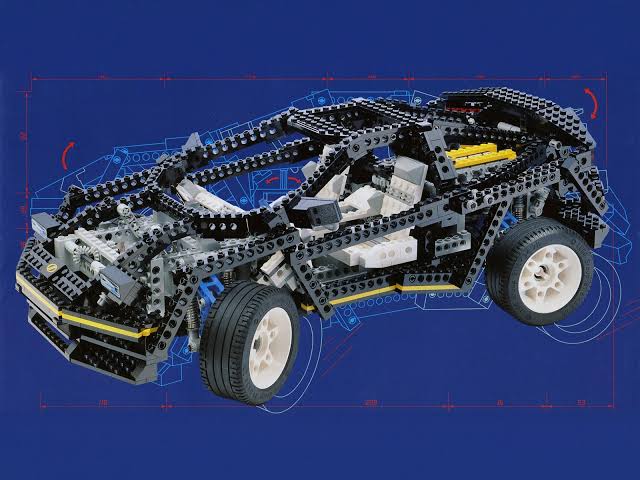
8880 Super Car: When “Super Car” Really Meant Something
The 8880 Super Car, released in 1994, is probably one of the most iconic models in the entire history of LEGO® Technic.
It did not need a licence from a car manufacturer. It did not have to be a Ferrari, Porsche, Lamborghini or McLaren.
It was simply a LEGO® Technic Super Car.
And that was enough.
What fascinated me most was what it concealed beneath its bodywork: a working V8 engine, four-speed gearbox, four-wheel drive, four-wheel steering and independent suspension.
A car built to show how a car works.
Perhaps this is the fundamental difference compared with many contemporary Technic sets: the shape certainly mattered, but it almost seemed to be the consequence of the mechanics.
First came the gears, transmissions, axles, steering and suspension.
Then came the car.
The 8880 is still one of those sets I look at and think: one day, this has to enter the collection.
8094 Control Center: LEGO® Becomes Programmable
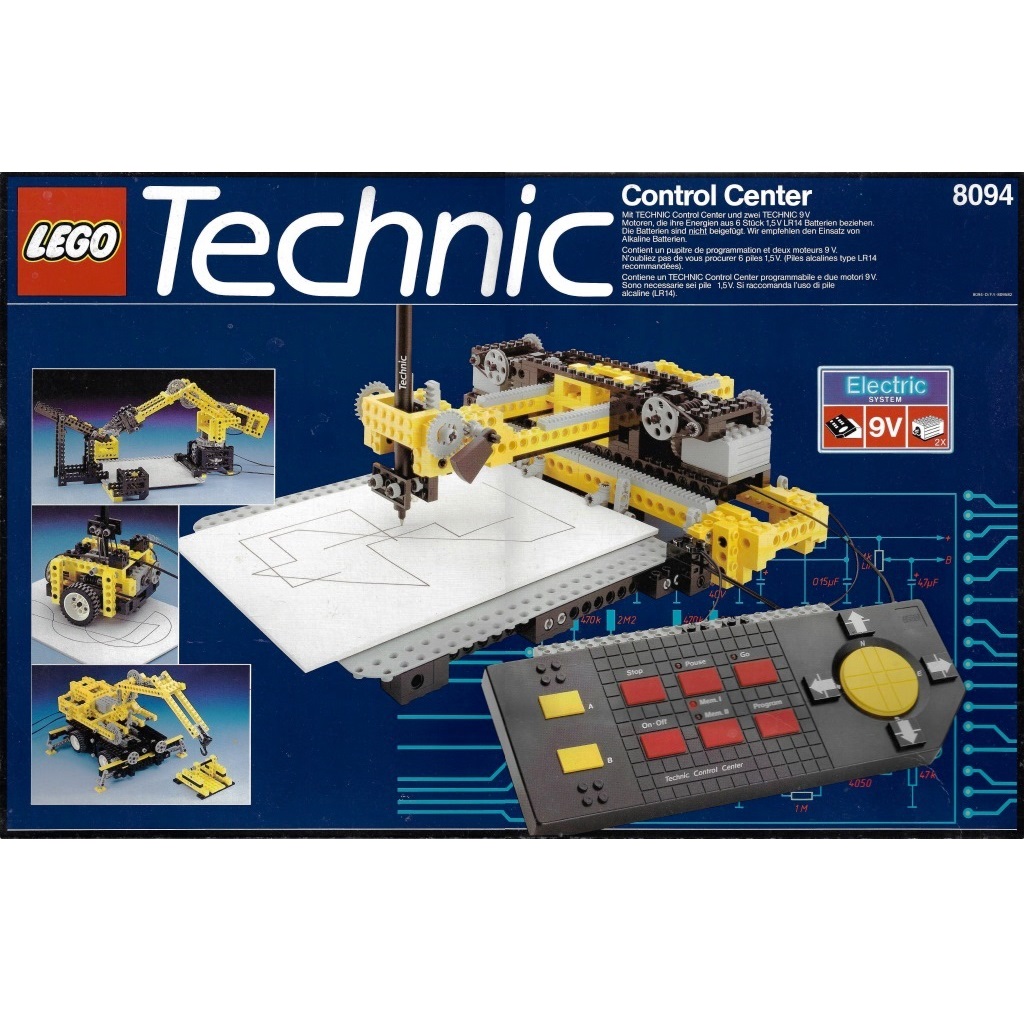
With the 8094 Control Center, released in 1990, we enter completely different territory.
And this is probably the kind of Technic I miss most today.
At the heart of the set was the Control Center: a programmable unit to which motors and sensors could be connected, controlling models capable of performing sequences of movements.
One of the proposed builds was a robotic arm.
Let us stop and think about that for a moment.
It was 1990.
LEGO® Technic was not simply asking you to build something you could move by turning a crank. It was introducing you to automation, programming, control and robotics.
For a child, it was almost science fiction.
That is what has always fascinated me about the 8094: it was not just a technological toy. It was an open door to something bigger.
You built a machine and then tried to understand how to give it a behaviour.
8485 Control Centre II: Even Further Ahead
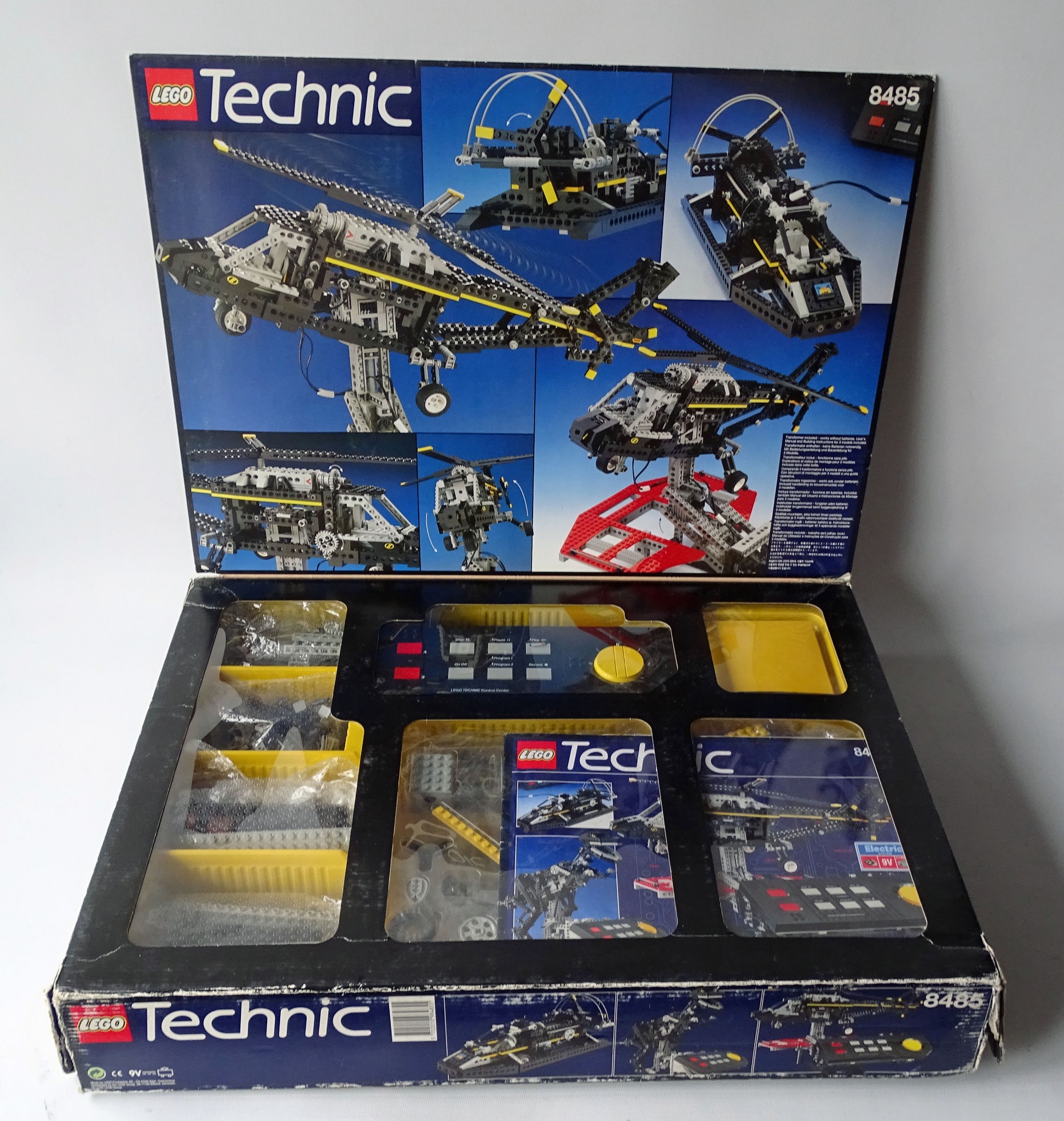
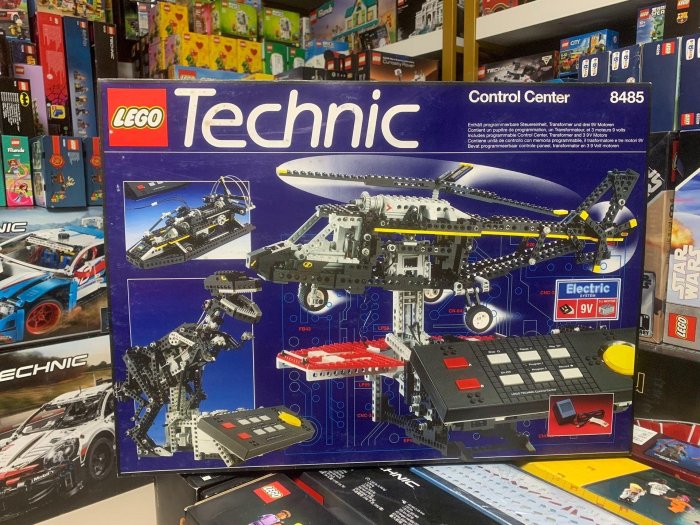
Five years later came the 8485 Control Centre II.
It was 1995, and LEGO® pushed the concept even further.
Once again, the centre of the experience was not an aesthetic reproduction, but what the model could do.
Motors, sensors, programming and building came together to create what we would now comfortably describe as an early approach to educational robotics.
It is remarkable to think how advanced such a concept was thirty years ago.
Today, of course, we have infinitely more powerful computers, smartphones, tiny microcontrollers, every kind of sensor, wireless connectivity and even artificial intelligence.
And that inevitably raises a question.
What Could We Do Today?
Imagine what a 2026 Technic Control Center could be.
Compact, precise motors. Distance, movement, tilt and colour sensors. Bluetooth. Visual programming for beginners and advanced programming options for anyone wanting to go further.
Cameras.
Automation.
Perhaps even systems based on artificial intelligence.
With the technology available today, LEGO® Technic could be an extraordinary platform for introducing both young people and adults to mechanics, robotics and automation.
We could build machine tools, manipulators, robots, automated systems and experimental vehicles.
The possibilities would be practically endless.
And instead…
Welcome to the LEGO® GARAGE Theme
…we have cars.
Lots of cars.
So many cars.
To be clear, some of them are beautiful. I own, build and enjoy several Technic car models myself.
The problem is not that they exist.
The problem is when they gradually become the dominant part of the theme’s identity.
Supercars, hypercars, racing cars, motorcycles and other licensed vehicles have taken up an increasingly large share of the Technic catalogue.
So much so that sometimes it feels as though the theme should now be called:
LEGO® GARAGE.
And that leaves a slightly bitter taste when I think back to sets such as 8094 and 8485.
Because Technic proved decades ago that it could be much more.
It Wasn’t Just Complexity. It Was Discovery.
Perhaps this is what connects the three sets I always wanted.
The 8880 let you discover mechanics.
The 8094 and 8485 added something even more fascinating: control and automation.
They were not simply trying to reproduce an existing object as faithfully as possible.
They showed you something.
They made you understand why a movement happened, how to transfer force from one point to another, how to coordinate multiple functions and how to turn a construction into a machine.
This is the kind of Technic I would personally like to see given more space again.
Not necessarily by abandoning cars.
But by placing alongside them sets capable of making us say:
“Wait… I can do this with LEGO® too?”
Because if we could program a robotic arm in 1990, imagine what we could build today.
In the meantime, however, I still have a small problem to solve.
8880.
8094.
8485.
Three spaces still empty in my collection.
For now. 😏
← JOURNAL