VINTAGE / TRAINS · 7866 · 1983
LEGO 7866: When LEGO Trains Were a Complete Railway System
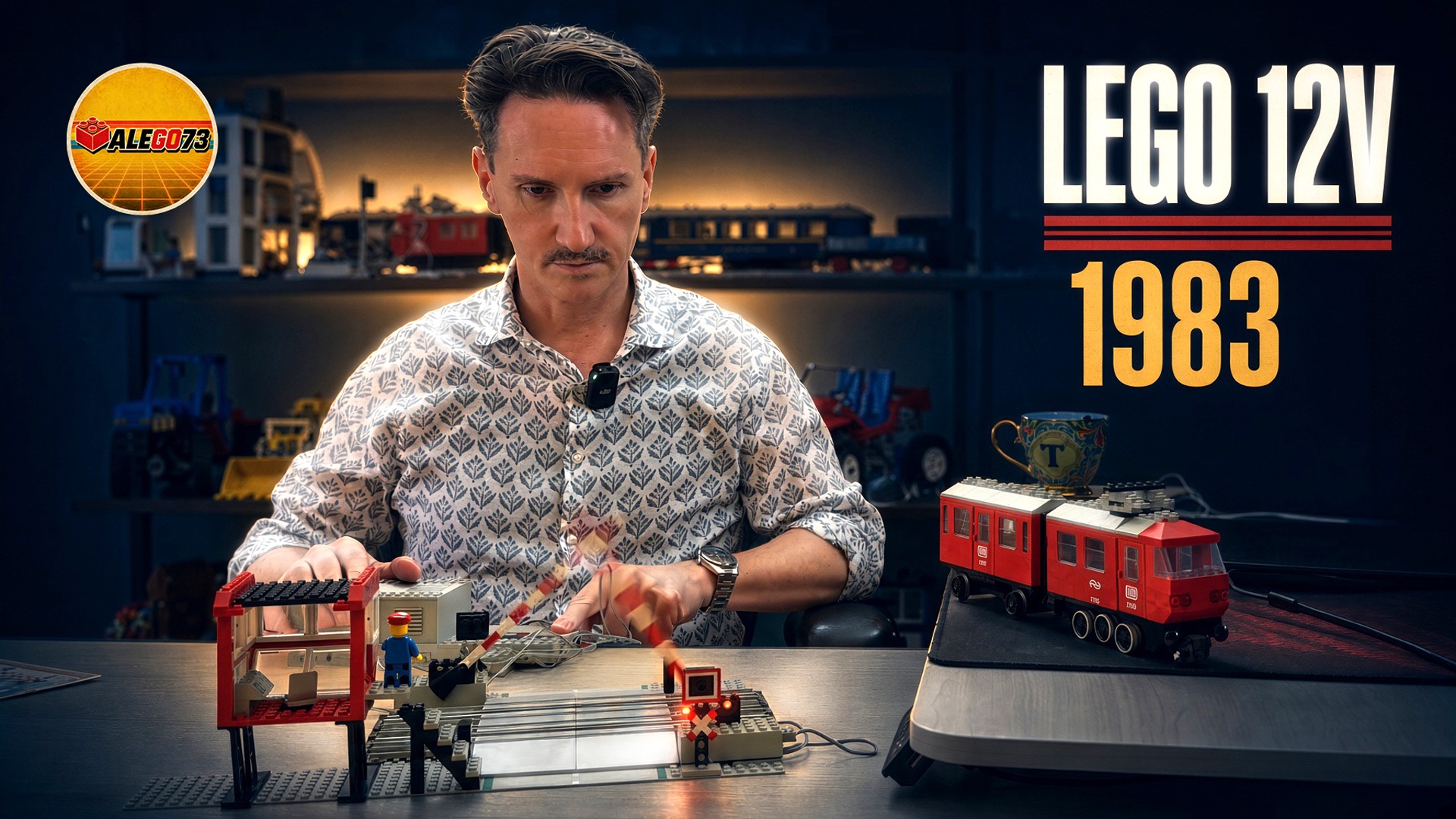
There are LEGO sets that, when you look at them today, tell a much bigger story than the model inside the box.
The LEGO 7866 Remote Controlled Road Crossing is one of them.
Released in 1983, the 7866 was a remote-controlled level crossing designed for the LEGO 12V railway system of the so-called Grey Era. Around 190 pieces, one minifigure and, at first glance, a fairly simple build.
But the moment you connect it, you realise there is much more going on.
It Wasn’t Just a Level Crossing
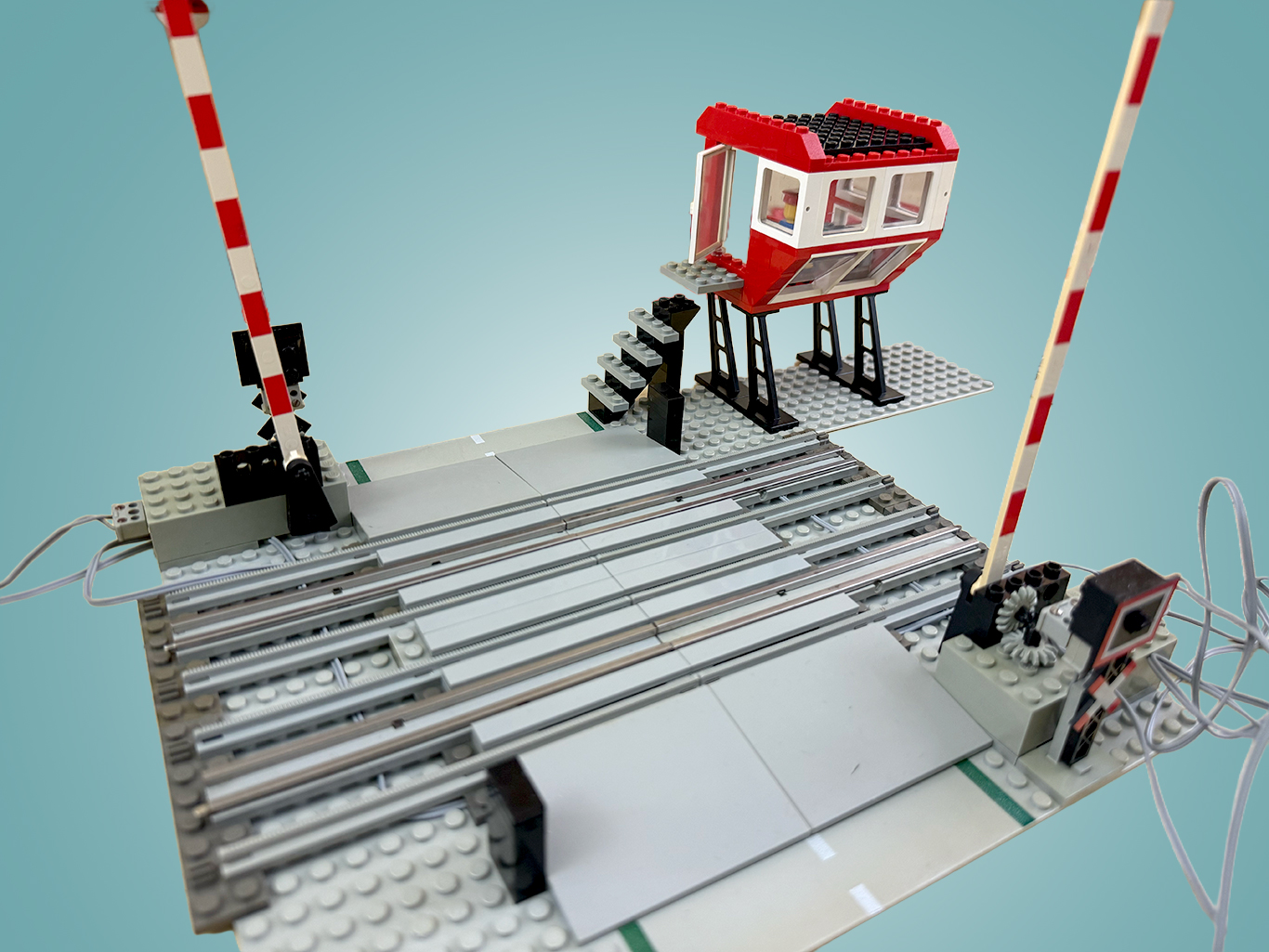
The two barriers are not simply elements you raise and lower by hand.
The system allows you to operate the barriers remotely, using components from the 12V railway system. And when the crossing is activated, the red warning lights begin to flash.
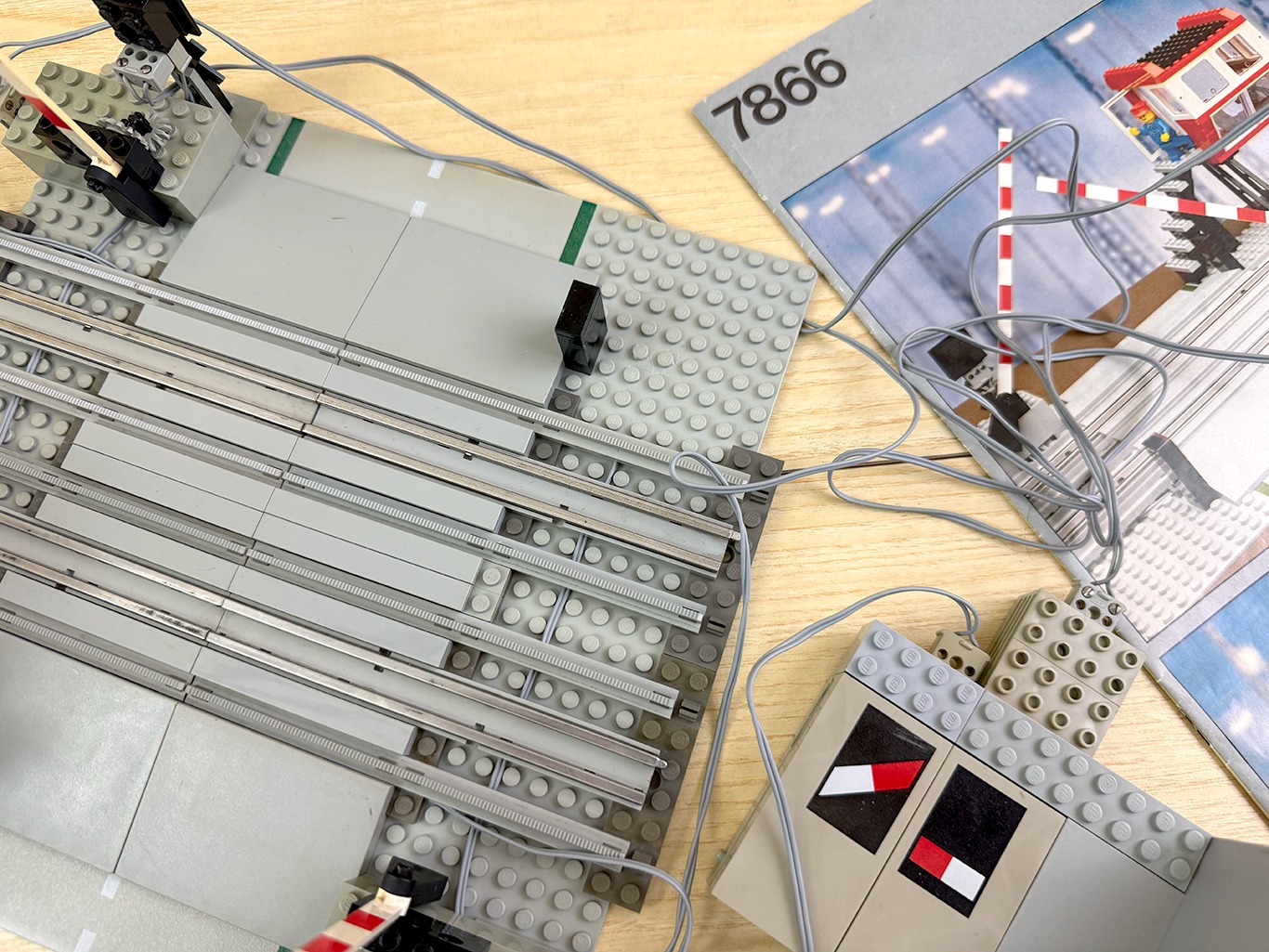
Inside the set you find real 12V electrical elements, wiring, dedicated parts for the barrier mechanism and even metal counterweights that help the gates operate correctly.
Today, the idea of an automated railway accessory might not sound particularly surprising.
But this was 1983.
And that is exactly what makes the 7866 so fascinating to me.
The Charm of Simplicity
Visually, the set is incredibly straightforward.
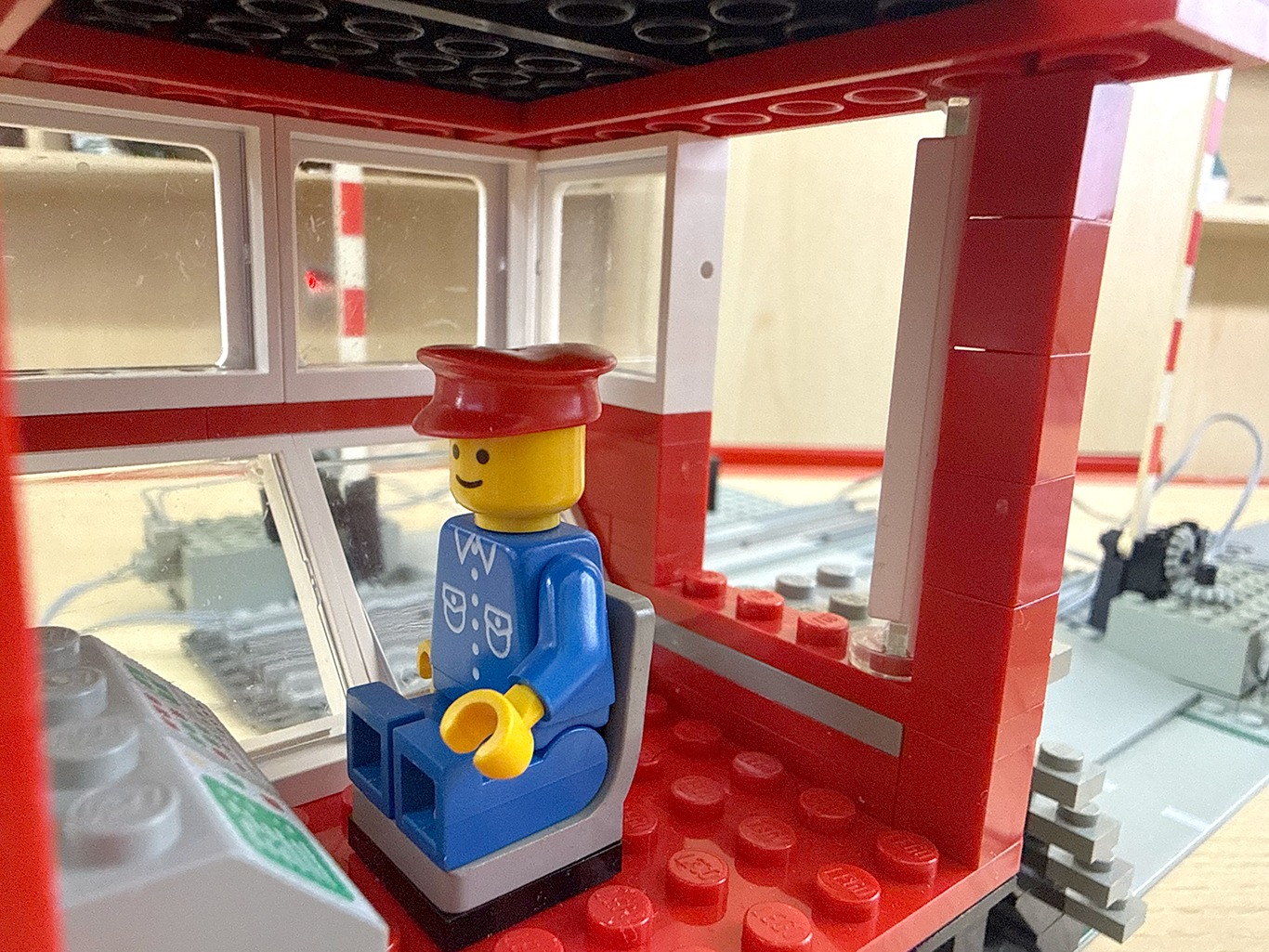
There is the road crossing, the two barriers, the warning lights and a small building for the railway operator.
Few pieces, very simple geometry and almost none of the visual complexity we are used to seeing in modern LEGO sets.
And yet, it works.
You look at it and immediately understand what it represents.
That is one of the things I still appreciate about LEGO from this era: it did not need hundreds of specialised elements to communicate an idea.
The complexity, if anything, was hidden in the way it functioned.
The Real Star Was the 12V System
On its own, the 7866 is already a very interesting railway accessory.
But to really understand it, I think you have to place it back into the world it was designed for.
In the 1980s, LEGO was not simply selling a locomotive and a few sections of track.
There was a complete railway ecosystem.
Alongside the trains, you could separately buy electrically controlled points, railway signals, lighting systems, wagon uncouplers and several other accessories designed to gradually expand your layout.
The 7866 level crossing was only one part of that system.
In other words, LEGO was not simply selling you a train.
It was selling you the first piece of your railway.
Even the Build Belongs to Another Era
Rebuilding the 7866 today makes it immediately obvious how much LEGO set design has changed.
A large part of the construction is there because it actually serves a function: cables run through the model, electrical components have to be positioned correctly, the barrier pivots are built into the structure and the mechanism that controls the entire crossing has to be assembled.
There is very little hidden behind panels or purely decorative elements.
Everything feels mechanical, visible and understandable.
And personally, that is exactly what makes it so enjoyable.
More Than Forty Years Later
The slightly paradoxical part comes when you compare the 7866 with what we have today.
Since then, LEGO has introduced infrared remote controls, Power Functions, Powered Up, Bluetooth, programmable hubs and smartphone control.
The technology is vastly more advanced.
And yet, a modern equivalent of the 7866 — meaning an official remotely controlled railway accessory fully integrated into the LEGO train system — is no longer part of the LEGO Trains range.
That is what makes this little set so interesting.
The 7866 does not fascinate me simply because it is old.
It fascinates me because it shows that, already in 1983, LEGO treated the train not as an isolated model, but as part of a complete railway world.
A railway made of tracks, points, signals, lights, stations, level crossings and mechanisms you could actually control.
When LEGO Trains Meant Building a Railway
Looking at it today, the 7866 may seem almost naïve.
The buildings are simple, the part count is small and the technology is entirely analogue.
But the moment the barriers begin to move and the red lights start flashing, that simplicity suddenly takes on a completely different meaning.
Because this little level crossing perfectly represents what LEGO Trains were in the 1980s:
not simply trains to build and run around an oval of track.
A complete railway system to build, expand and control.
And more than forty years later, it still works.
← ARCHIVE