
JOURNAL / LEGO SMART PLAY / OPINION
Smart Brick: An Announced Flop?
When LEGO unveiled SMART Play at CES 2026, the language was anything but cautious.
On its own website, LEGO describes it as “our most revolutionary innovation since the creation of the minifigure in 1978.”
That is quite a statement.
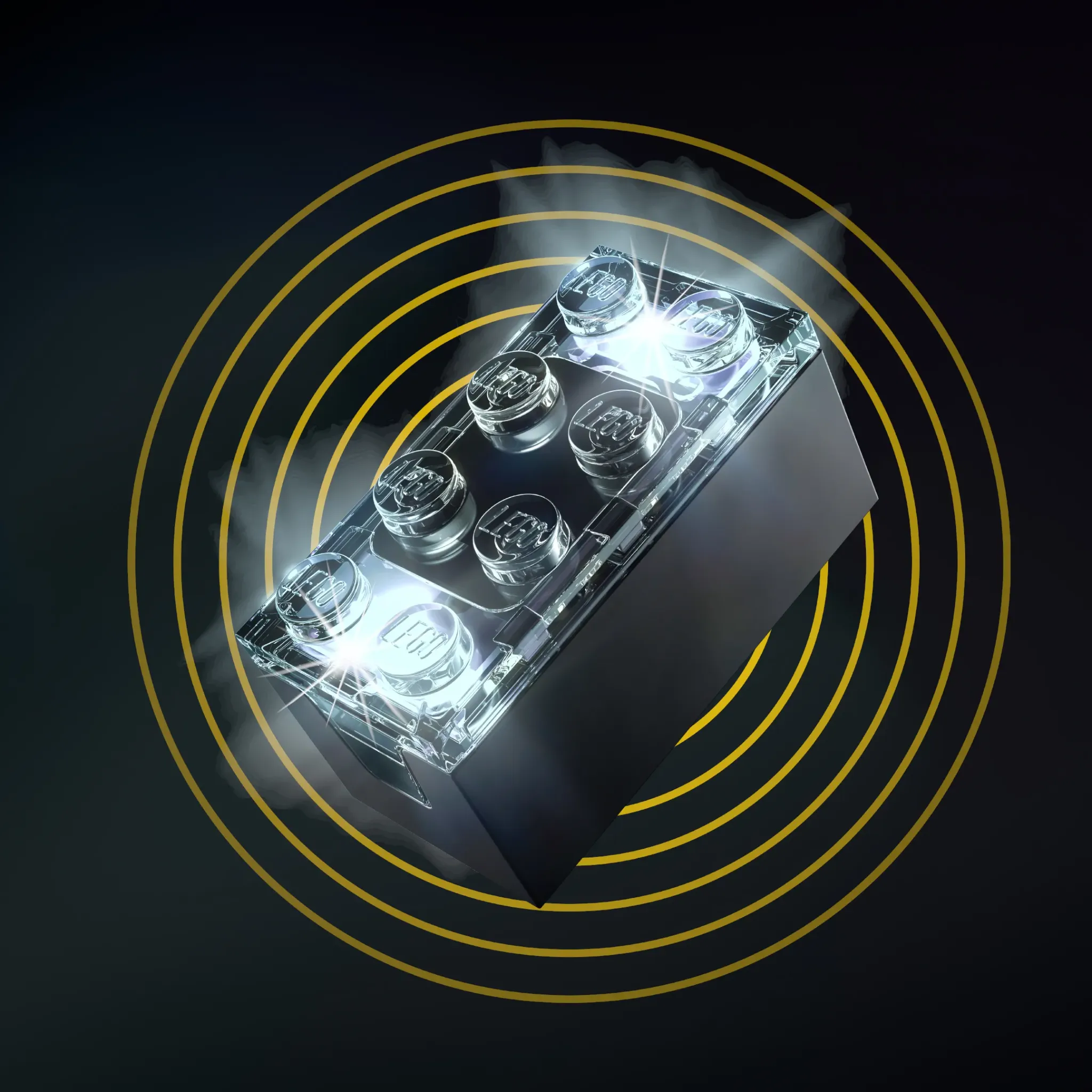
At the centre of the system is the SMART Brick: a 2×4 brick equipped with motion sensing, recognition of SMART Tags and SMART Minifigures, lights, sounds and app-based updates. LEGO Official Shop
So no, technically it is not “just a brick with a couple of lights.”
But for me, the real question is different.
Is all of this really enough to be presented as a revolution?
I have been sceptical since the announcement.
And a few months later, especially looking at the first Star Wars wave, I think there are even more reasons to ask that question.
From MINDSTORMS to a Brick That Goes “Pew Pew”
What feels strangest to me is looking at SMART Play and remembering what LEGO had already achieved years ago.
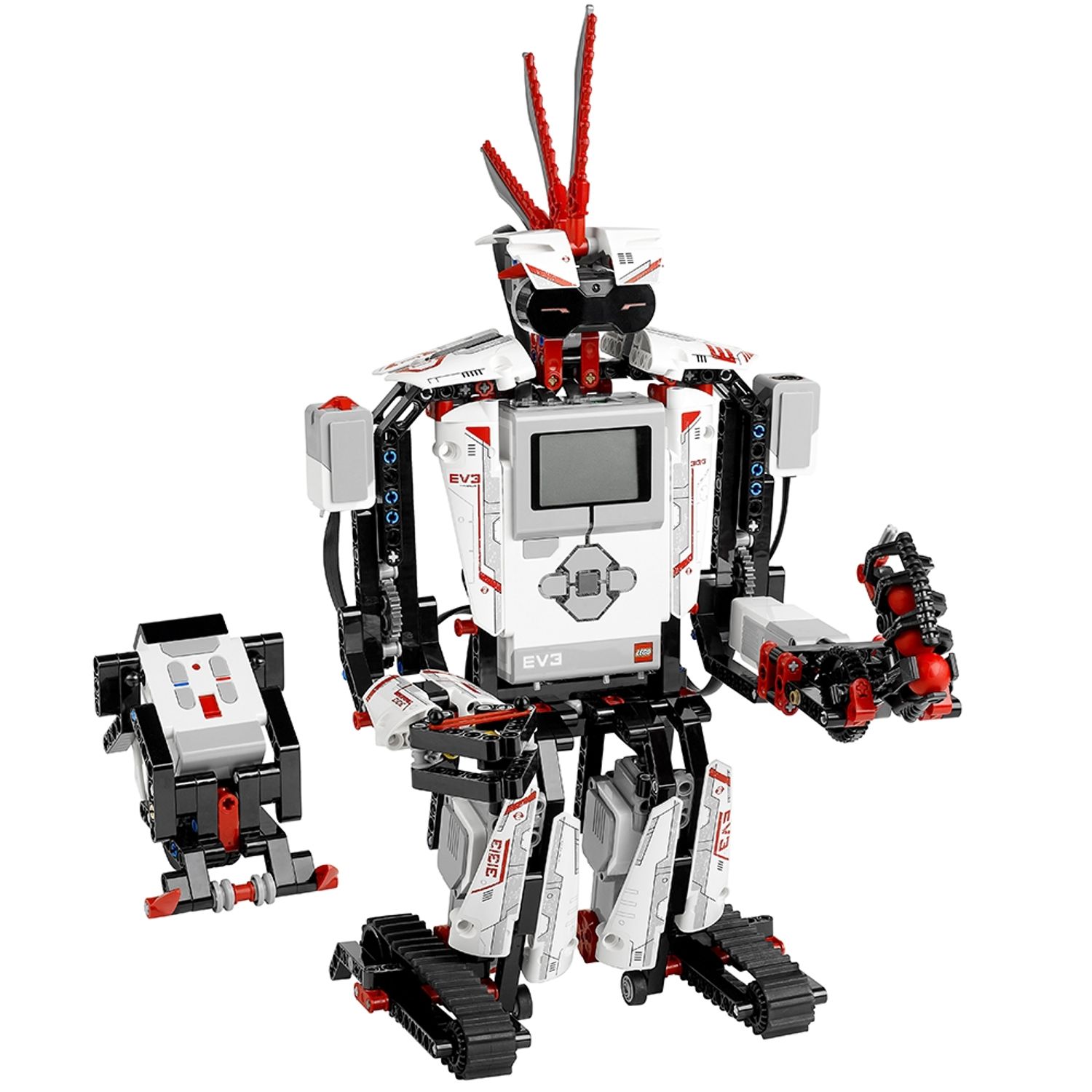
Take MINDSTORMS EV3.
The EV3 Brick was a real programmable computer: ARM9 processor, Linux operating system, expandable memory, USB, Bluetooth, support for motors and sensors, and the ability to create genuinely complex programs. LEGO Official Shop
You could build a robot.
You could program it.
You could decide what it was supposed to do.
You could create behaviours, conditions, loops, variables, process sensor data and interact with the environment.
And all of that existed more than a decade ago.
Today, instead, we are being told that a brick able to recognise certain elements, react to movement and mainly produce sounds, lights and predefined responses is some kind of technological milestone.
SMART Play does include accelerometers, colour sensing and recognition technology for Tags and Minifigures.
So internally, it is actually quite sophisticated.
But what reaches the user is deliberately much simpler and much more closed.
And that is where I struggle to get excited.
Not because SMART Brick is technologically trivial.
But because the final experience feels trivial compared to the technology inside it.
Sophisticated Technology Used for Simple Things
That is the paradox.
SMART Brick contains a lot of technology.
It knows how it is being moved.
It recognises characters and objects through SMART Tags.
It changes its behaviour.
It can receive updates.
Then you put it inside an X-wing and it makes laser noises.
You move a lightsaber and you get a sound effect.
You place a character somewhere and it triggers another sound.
A few lights come on.
Is it fun?
Yes.
Could children enjoy it?
Absolutely.
Revolutionary?
That is where I lose the thread.
Because we have moved from LEGO systems where technology was a tool in the hands of the user, to a system where the technology mostly decides which effect to trigger based on what you are doing.
That is a very important difference.
With MINDSTORMS, the question was:
“What do you want to build and program?”
With SMART Play, the question often becomes:
“What reaction has LEGO programmed for this action?”
And Then There Is the Sound Problem
Star Wars was probably one of the riskiest franchises to use for the launch.
Star Wars has some of the most recognisable sound design in popular culture.
A TIE Fighter needs to sound like a TIE Fighter.
A lightsaber needs to sound like a lightsaber.
R2-D2 needs to sound like R2-D2.
If you rely on a tiny speaker built into a brick, there are obvious physical limits.
And that has already been one of the criticisms surrounding the first wave: the sound quality and, more broadly, whether the experience really matches the expectations created by the licence. Brickset.com
To put it less diplomatically:
if you sell me the idea that the galaxy comes to life, then those scratchy little sounds have to survive comparison with fifty years of iconic Star Wars audio.
Good luck with that.
A Launch That Was Far Less Universal Than the Messaging Suggested
There is also another detail that is particularly noticeable from Italy.
SMART Play was not launched in Italy.
The Italian LEGO website shows the products and all the related communication, but clearly states that they are not available for purchase in our region. LEGO Official Shop
Italy was left out of the initial launch, together with other markets. SmartWorld
And for me, that creates a slightly ridiculous contrast:
the biggest LEGO innovation since the minifigure…
but you cannot buy it in Italy.
Fantastic.
Three Months Later: Discounts Approaching 50%
Then we get to the more interesting part.
Actual sales figures are not public, so we cannot definitively say that SMART Play is commercially a flop.
That needs to be clear.
But there are signs that at least make the question reasonable.
In June 2026, Brickset looked at Amazon UK pricing for the first Star Wars wave and found some very heavy discounts only a few months after launch.
The Yoda’s Hut and Jedi Training 75422, originally priced at £59.99, had dropped as low as £30.83, almost 49% off.
The Luke’s Landspeeder 75420, originally £34.99, had fallen to £20.40.
Several other sets in the range were discounted by around 25%.
Brickset also reported relatively low monthly Amazon sales figures for some of those models compared with themes such as City, Creator or Ninjago. Brickset.com
And it was not just Amazon UK.
Similar reductions were being reported at John Lewis, Smyths, Sainsbury’s, Tesco and other British retailers.
The pattern continued later on.
By September, the SMART Play-compatible Millennium Falcon 75426 was being tracked in Europe at around €67.99 against a €99.99 RRP, roughly 32% off.
The 75427 Throne Room Duel & A-Wing had been seen around €119.99 against €159.99, approximately 25% below list price. BrickPrice
None of this, by itself, proves failure.
LEGO sets get discounted all the time.
But very large discounts only months after the launch of what is supposed to be a major new strategic platform are at least worth paying attention to.
There Is Also a Barrier to Entry
Another decision I find questionable is the distinction between All-in-One sets and sets that are merely SMART Play Compatible.
The SMART Brick is not included with every set.
Some products include the SMART Brick and charger.
Others only contain compatible SMART Tags and Minifigures, meaning you need to already own an All-in-One set to get the full interactive experience.
So yes, you can buy a SMART Play set…
that is not really SMART until you buy another one.
Not exactly the most elegant entry point into a new ecosystem.
But There Is One Thing Worth Acknowledging
LEGO does not appear to be backing away from SMART Play.
Quite the opposite.
The second major application, centred around Pokémon, seems to address some of the weaknesses of the Star Wars launch.
Early reactions have been noticeably more positive.
The system is used for training, battles, character recognition and interactions that seem to fit the nature of the Pokémon franchise much more naturally. The Verge
And that makes the whole story more interesting.
Maybe the problem is not the SMART Brick itself.
Maybe the problem was how it was introduced.
So: An Announced Flop?
For the first Star Wars wave, there are certainly some warning signs.
Heavy discounts very early.
Limited geographical availability.
A system that requires specific starter products to work fully.
An interactive experience that, at least to me, feels far less revolutionary than the way it has been marketed.
But above all, I still cannot shake the same feeling I had at the beginning:
did we really need this?
My problem with SMART Brick is not that it works badly.
It is that it still feels like an extremely sophisticated technological solution looking for a problem to solve.
And the more I compare it with what LEGO was already capable of doing with MINDSTORMS, the contrast becomes harder to ignore.
We used to have programmable control units that allowed a child to build a robot and decide independently how it should behave.
Today we have a brick that, after years of development and an impressive amount of miniaturised technology, recognises Darth Vader and plays a sound.
I do not know whether SMART Play will ultimately be a flop.
It is still too early to say, and Pokémon may even prove that the concept simply needed the right context.
But one thing I can say.
If this really is “the biggest LEGO innovation since the minifigure in 1978,” then perhaps the problem is not what the SMART Brick does.
It is what we have decided to call innovation.
← JOURNAL