
TRAINS / CREATOR EXPERT / 10277 · 2020
LEGO® 10277 Crocodile Locomotive
When Technic and railways meet in a display model
Some locomotives have a shape that is instantly recognisable, even to people who are not railway enthusiasts.
The Swiss Crocodile is certainly one of them.
With its long articulated noses, raised central body and enormous pantographs on the roof, it almost seems designed to become a LEGO® model.
And in 2020 LEGO® did exactly that with set 10277 Crocodile Locomotive, a 1,271-piece model released under what was then still known as the Creator Expert line, later absorbed into the LEGO® range for adults.
For someone like me, who has always had a soft spot for LEGO® trains, the arrival of a locomotive like this was already a small event.
Finally, a train built properly.
No huge preformed railway elements used to imitate entire sections of the nose or bodywork: here, the Crocodile is genuinely built from bricks.
And that was exactly what I wanted to see.
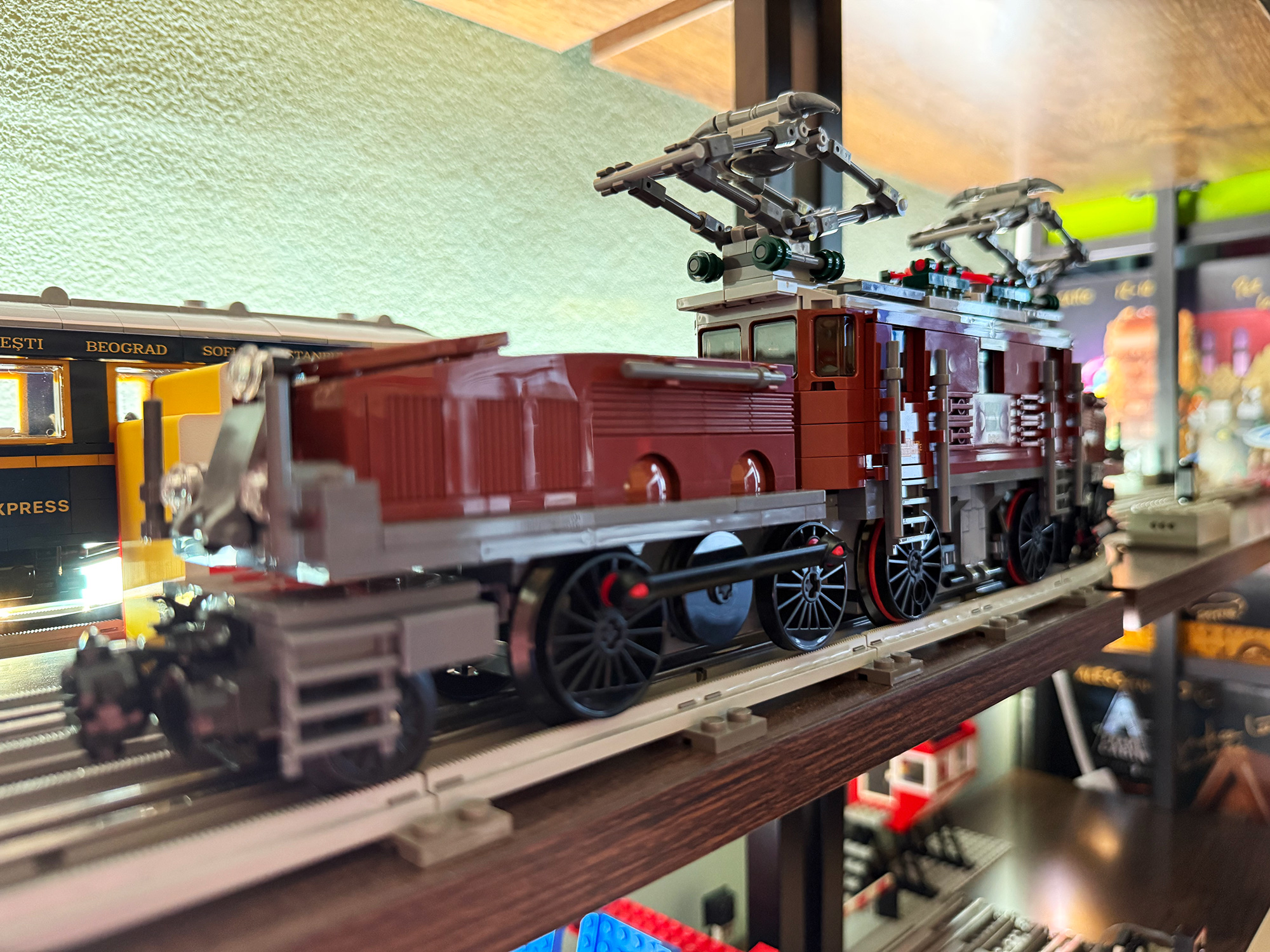
A Crocodile Designed for Display
It is important to make one thing clear immediately: the 10277 was conceived first and foremost as a display model.
The display base, with its section of track built entirely from bricks, reinforces the almost museum-like appearance of the model.
Aesthetically, it works extremely well.
The combination of reddish brown, dark brown and black successfully conveys the heavy, industrial character of the original Crocodile.
The overall proportions work too, and when it is displayed the identity of the locomotive is immediately recognisable.
Of course, this is not a perfect scale railway reproduction.
Nor do I think it would make sense to expect one.
LEGO® inevitably has to find a compromise between accuracy, buildability, strength and the available elements.
There are, however, a few simplifications.
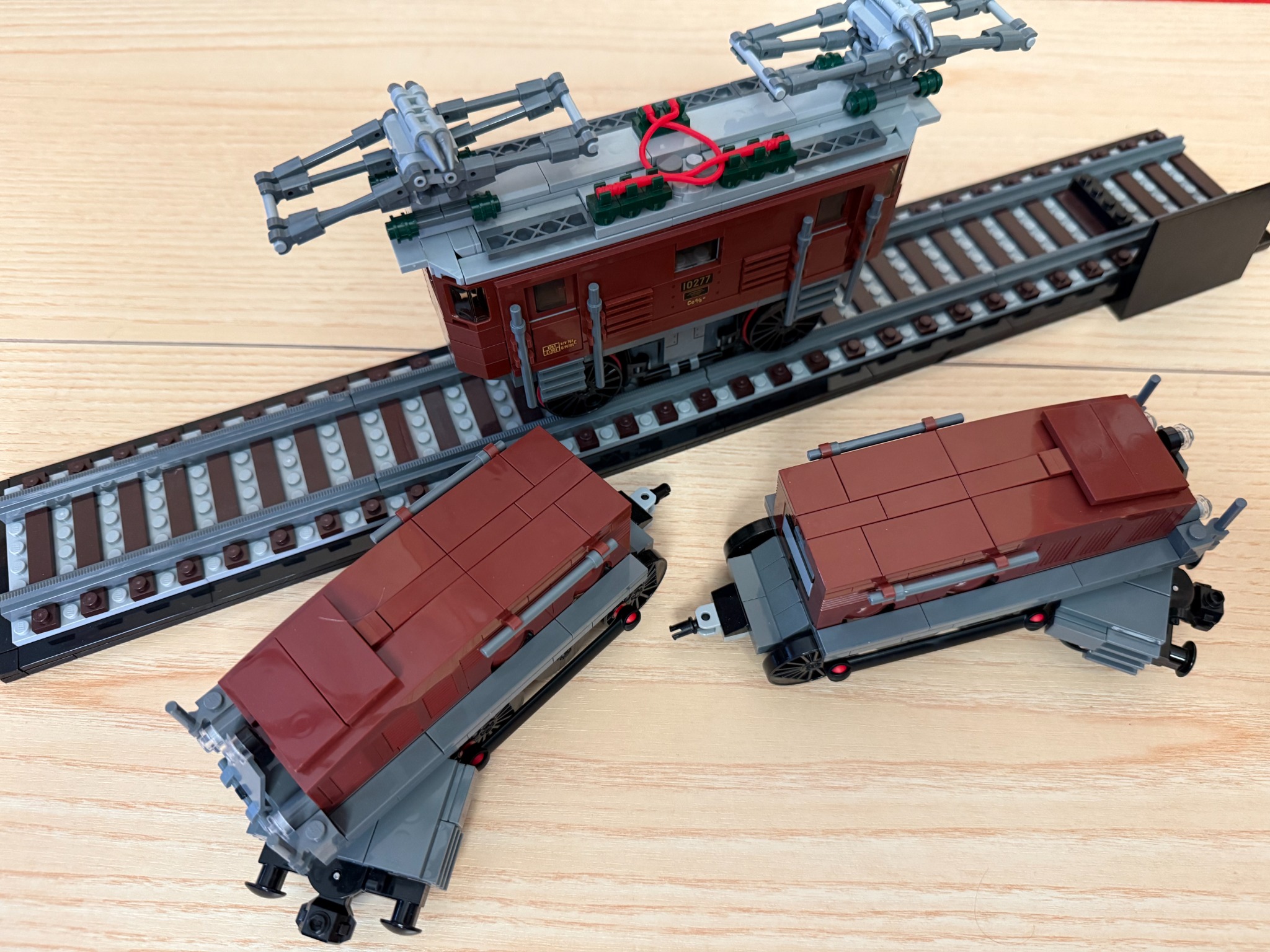
How Accurate Is It to the Original?
The two noses sit rather far from the central body, and several parts of the transmission are greatly simplified compared with the complexity of the real locomotive.
Some compromises were also made along the sides: the LEGO® model is more symmetrical from one side to the other than the real machine, while certain details have been reinterpreted using standard elements.
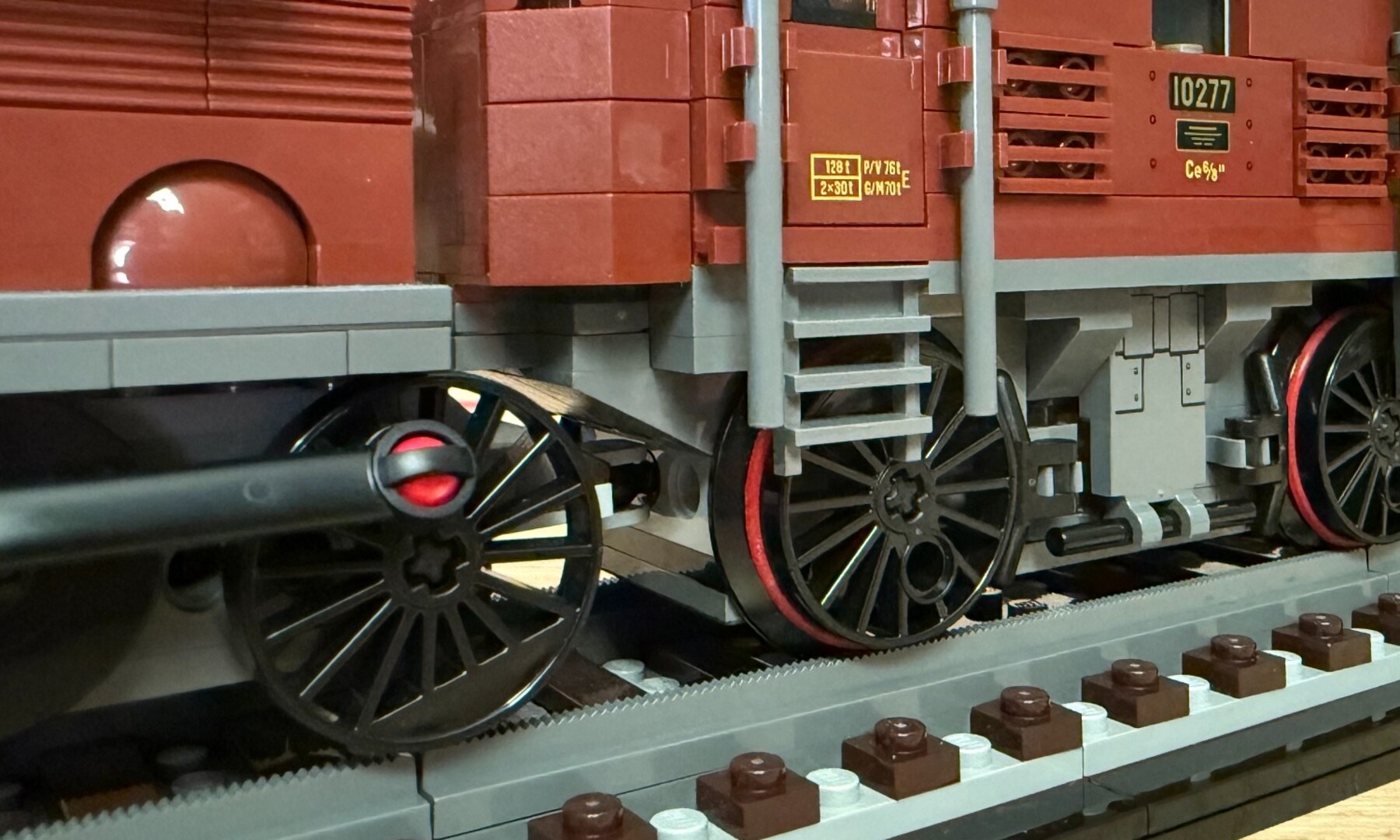
There is also a fairly obvious peculiarity when you study the wheel arrangement carefully: one wheel sits slightly above the rail.
This solution allows the model to negotiate curves when it is used on an actual LEGO® railway layout.
They are compromises.
Overall, considering the scale and the building system, I still find the result more than convincing.
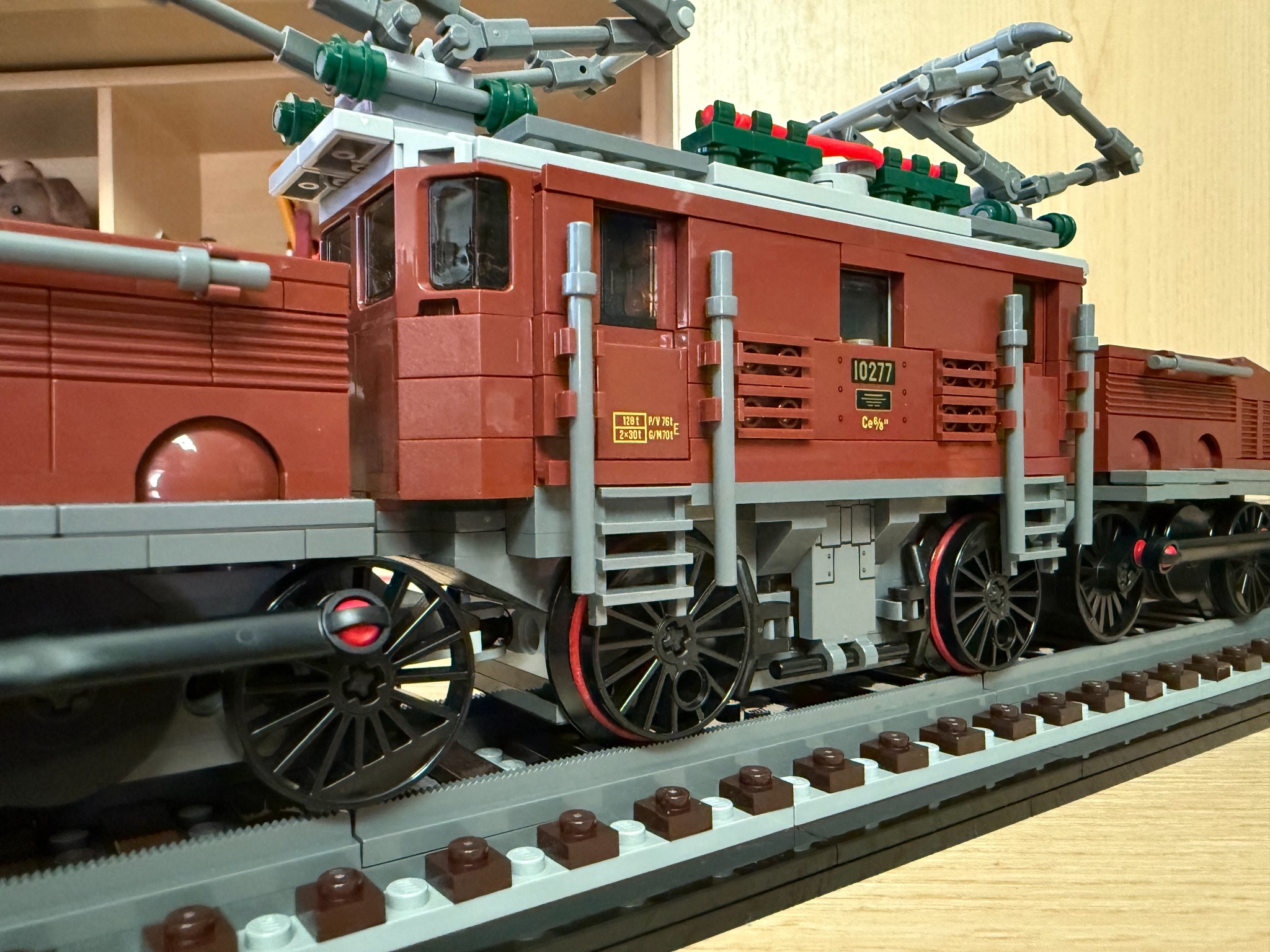
An Enjoyable but Very Symmetrical Build
The build is not especially complex and takes a few hours.
However, one unavoidable characteristic of this locomotive has to be taken into account: symmetry.
Several sections have to be built twice.
The noses are essentially twins, as are some of the roof elements and the pantographs. This inevitably makes certain stages repetitive.
My advice is to build identical components in parallel whenever possible.
Instead of completing one module and then starting the second from scratch, prepare matching elements at the same time. It makes the process flow much more smoothly.
The central section of the locomotive was the part I personally found most interesting.
There is also another small test of patience: the display track.
It looks excellent once it is finished.
Building every individual element one by one is rather less entertaining.
There are many of them.
Very many.
The Real Flaw: the Black Instruction Manual
If there was one thing that genuinely bothered me during the build, it was the instructions.
The manual uses a black background.
Graphically beautiful.
Far less beautiful when you have to distinguish a huge number of dark brown and black pieces against it.
In some steps, working out exactly which element to use and where to place it becomes unnecessarily difficult.
This is not a problem with the build itself. It is a readability problem.
In this case, the digital instructions may actually be easier to use on a screen, where brightness and contrast help separate the elements.
An instruction manual should help you build before anything else.
Here, in my opinion, aesthetics took precedence over function.
Almost Everything Is Printed. Fortunately.
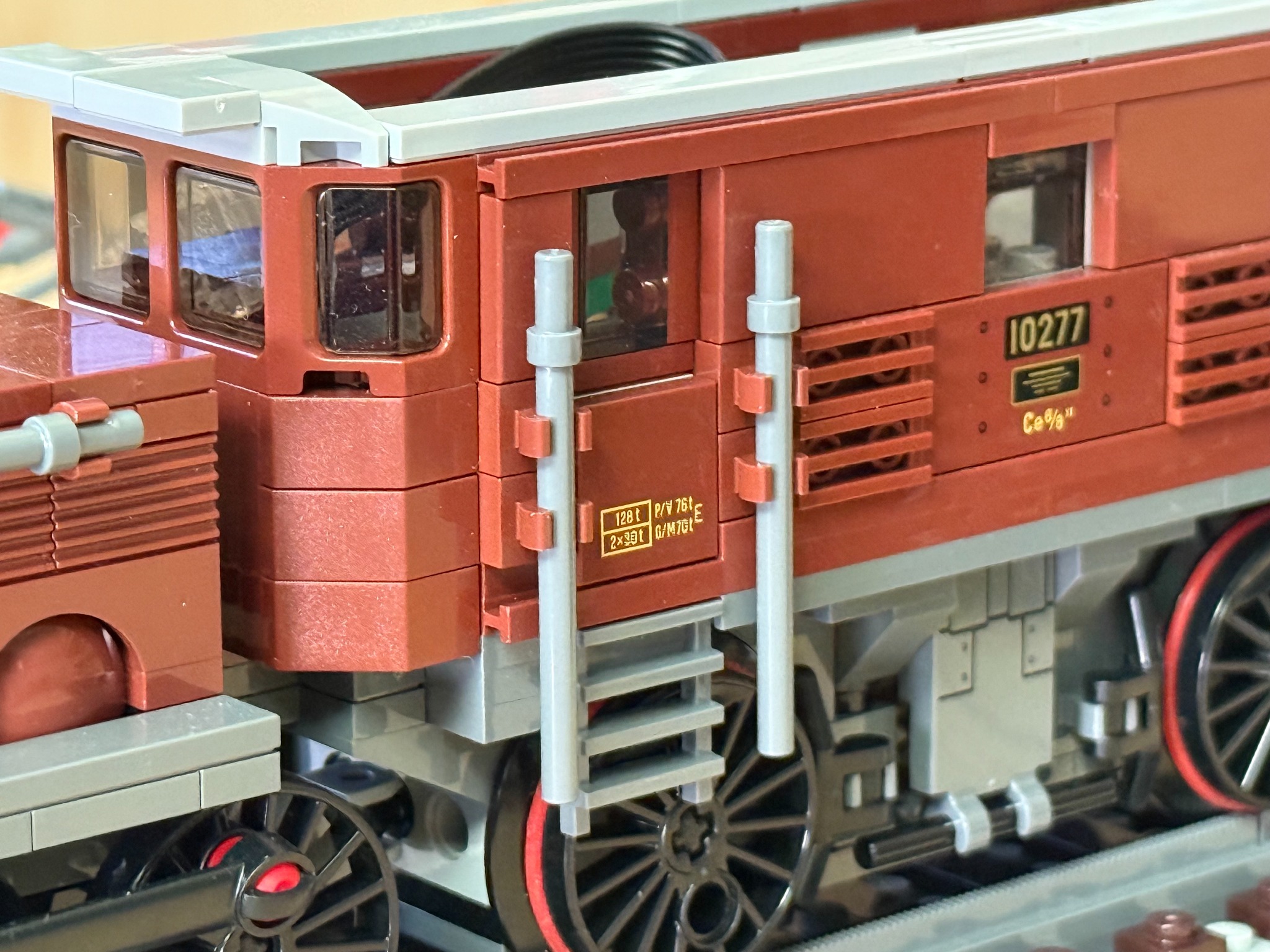
One thing I appreciated a great deal was the decoration.
Most of the elements are printed.
There is still one sticker containing the locomotive specifications, intended for a plate. Given my less-than-idyllic relationship with stickers, I chose not to apply it.
It is difficult not to wonder why, after producing all the other decorated elements, LEGO® did not print this one too.
Compared with many other sets, however, the situation is very positive.
Those Minifigures…
The set also includes two railway minifigures.
And I have to admit they left me rather puzzled.
The uniforms use colours that do not seem especially consistent with what you would expect from staff associated with the real locomotive.
Given the almost celebratory and historical nature of the model, I would have preferred something more carefully researched and faithful to the subject.
Is it a secondary detail?
Certainly.
But precisely because this is primarily a display model, those little touches could have contributed even more to its credibility.
A Display Model, Yes. But There Is Technic Underneath.
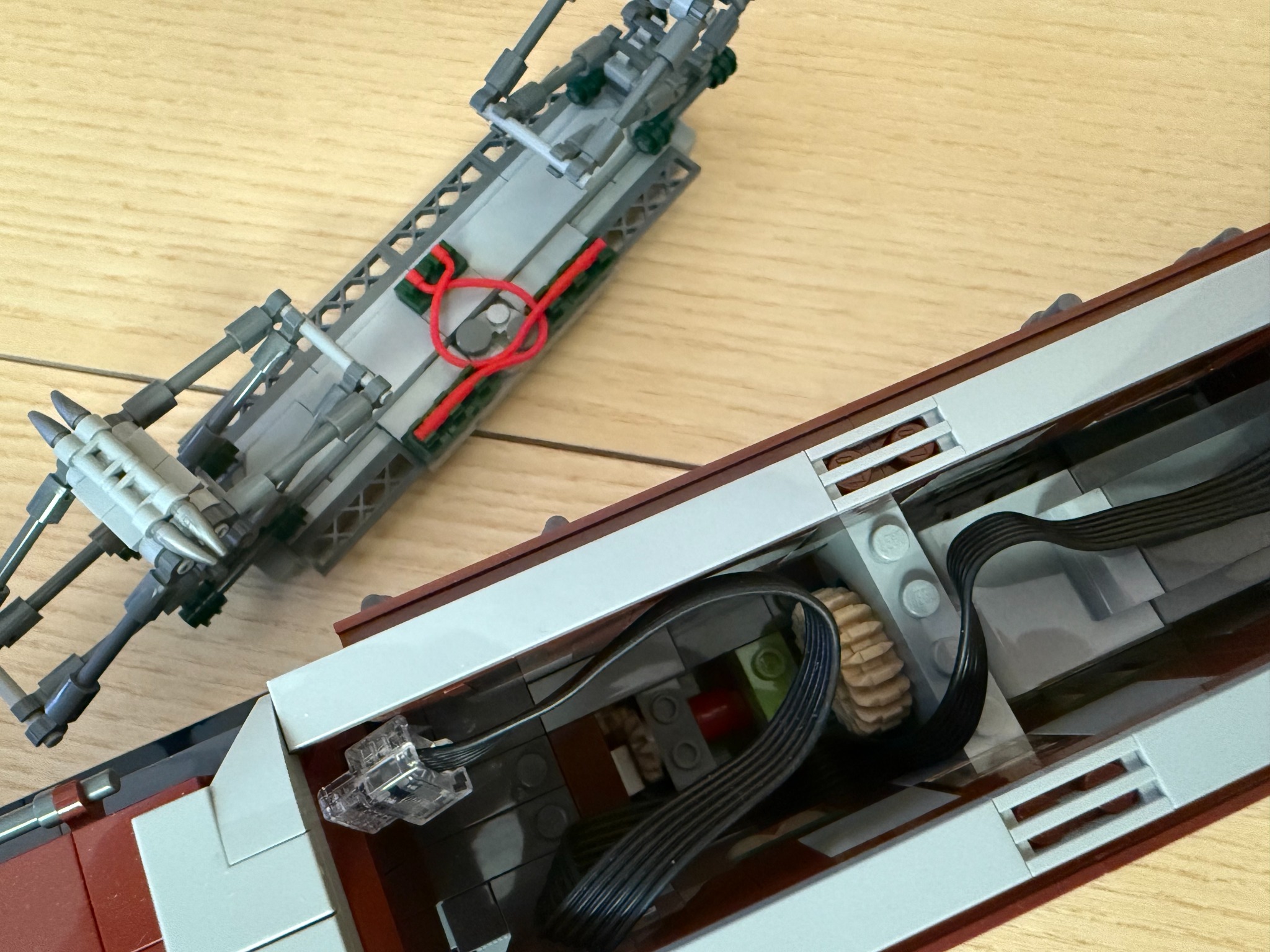
The interesting thing about the 10277 is that, although it is essentially sold as a static model, the build immediately reveals that LEGO® designed it from the beginning with motorization in mind.
Inside the locomotive are several Technic elements and a structure prepared to accommodate the Powered Up system.
Installation is extremely simple.
The hub and motor fit into the spaces provided and, externally, the locomotive’s appearance barely changes at all.
The only real sacrifice is part of the cab interior, inevitably occupied by the hardware required for motorization.
And this is where the Crocodile completely changes character.
From an elegant display model, it can become a genuine working LEGO® locomotive.
For a Technic train, I consider that possibility almost essential.
The only pity is the additional cost of the electronics: the hub and motor represent a significant expense compared with the price of the model itself.
The Kind of LEGO® Locomotive I Want to See More Often
In the end, my opinion of the 10277 is decidedly positive.
It is not perfect.
The black-background instructions were probably the flaw I felt most strongly during the build. There are some simplifications compared with the real Crocodile, several proportions inevitably adapted to the LEGO® system, and those minifigures still leave me with a few doubts.
But once the locomotive is sitting on its track, all of that becomes decidedly less important.
Because the Crocodile Locomotive is simply beautiful to look at.
It has presence.
It has mechanics.
It has an important railway history behind it.
Above all, it is a train genuinely built from bricks, rather than bodywork created from enormous preformed elements.
For anyone who loves LEGO® trains, it represents exactly the kind of model I would like to see more often: detailed enough to work as a display object, yet still LEGO® enough to leave room for mechanics, motorization and the possibility of actually putting it on the rails.
So, for me, the 10277 Crocodile Locomotive gets a definite thumbs-up.
And once it is motorized?
Well, a Crocodile is made to move.
Not to sit still in a display case.
← ARCHIVEMy review of the LEGO® Orient Express 21344 offers another perspective on display trains and motorisation. For the broader railway context, the LEGO® 12V system and my LEGO® train reviews and projects trace the journey from vintage railways to today.